Samuel Haislip built the home for his wife and their seven children around 1850. The original structure included two bedrooms and was built from logs and cedar siding.
Brentsville is a village located in the center of Prince William County, two miles southeast of Bristow and three miles directly south of Manassas. It is southeast of the point where Old Church Road (Route 649) meets Bristow Road (Route 619) which bisects the district. The land around the village is dotted with small ponds. Just to the north and northeast of Brentsville, the land slopes down to Broad Run; to the southeast the grade drops to Cedar Run. These two tributaries join east of Brentsville to form the Occoquan River. The settlement originally developed around the fourth Prince William County Courthouse that was built there in 1820-22.1
Prince William County Office of Historic Preservation’s Facebook Post – May 17, 2024
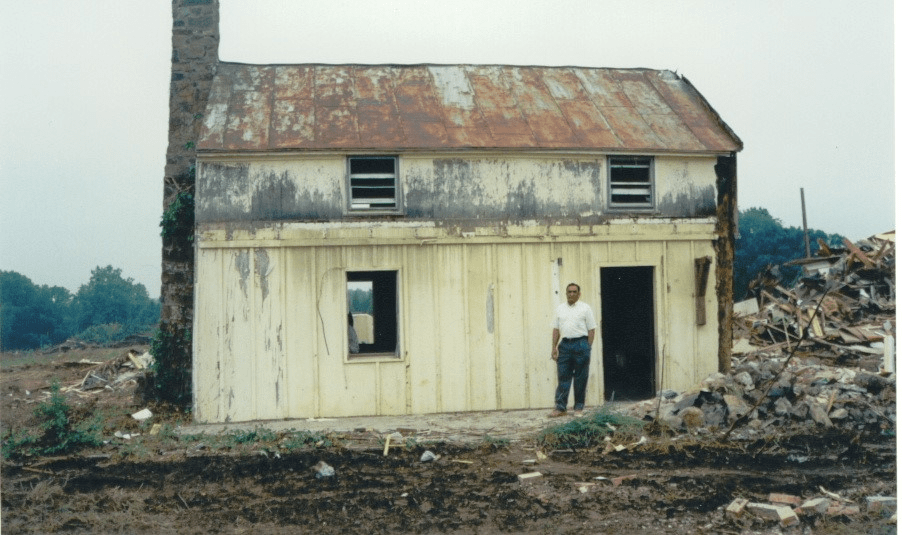
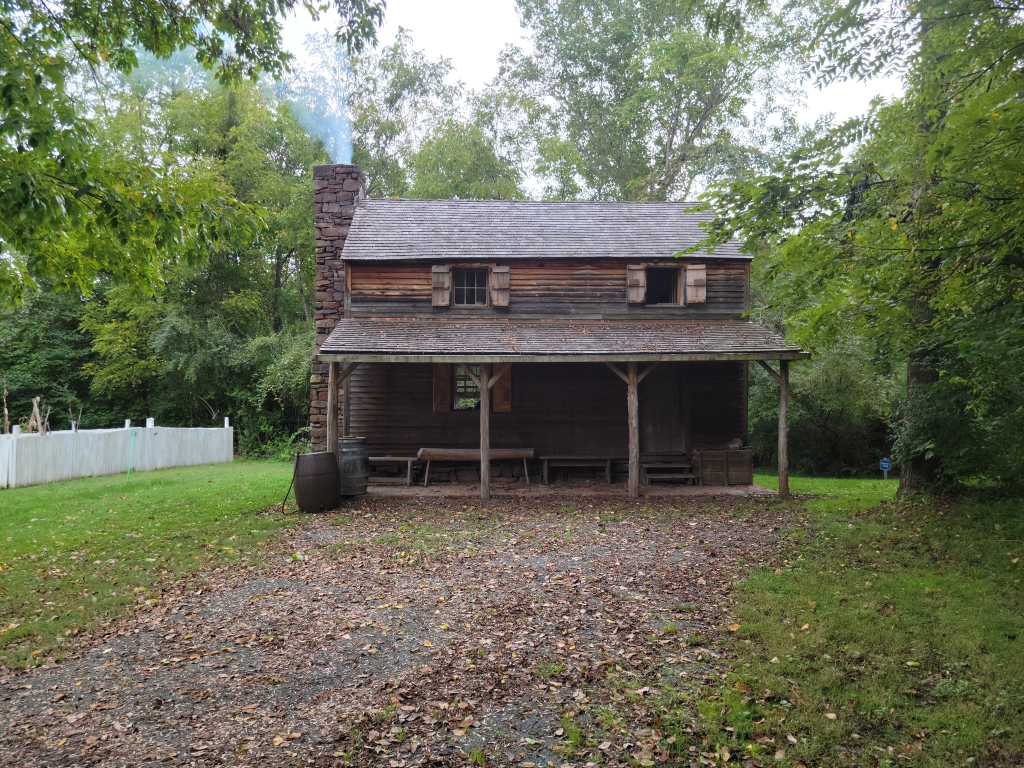
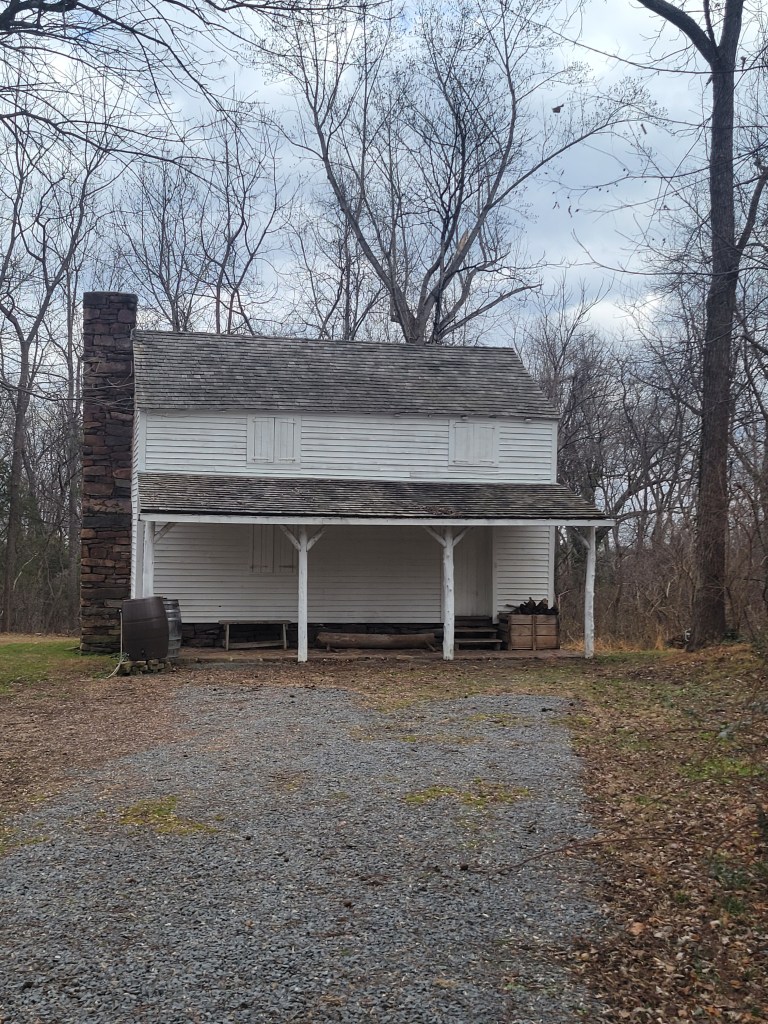
Then and now, the Haislip-Hall House. Originally located in the Linton Hall area, what is now the Braemar development, it was finished by Samuel Haislip and his family about 1853. At that time, it was occupied by Samuel, his seven children, his wife Sophia having died some years before, as well as two to four slaves.
After passing through many hands, in the early 2000s the old house was facing demolition and was moved from Tetler Way, Bristow, VA (off Vint Hill Road now Dunbarton part of Braemar development) to Brentsville Courthouse Historic Centre in 2008 and restored thanks to the efforts of the Friends of Brentsville Historic Centre and Prince William County’s Historic Preservation Division. The house was moved by truck to Brentsville Courthouse Historic Centre for restoration, which took place from 2006-2007. Today, it welcomes hundreds of guests a year to learn about rural life in 19th century PWC!2
News and Messenger
Woodbridge, Virginia · Friday, February 06, 2009
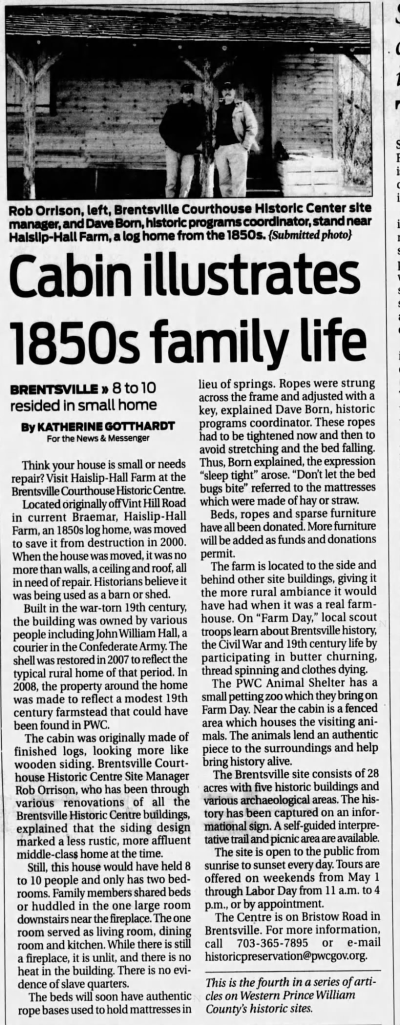
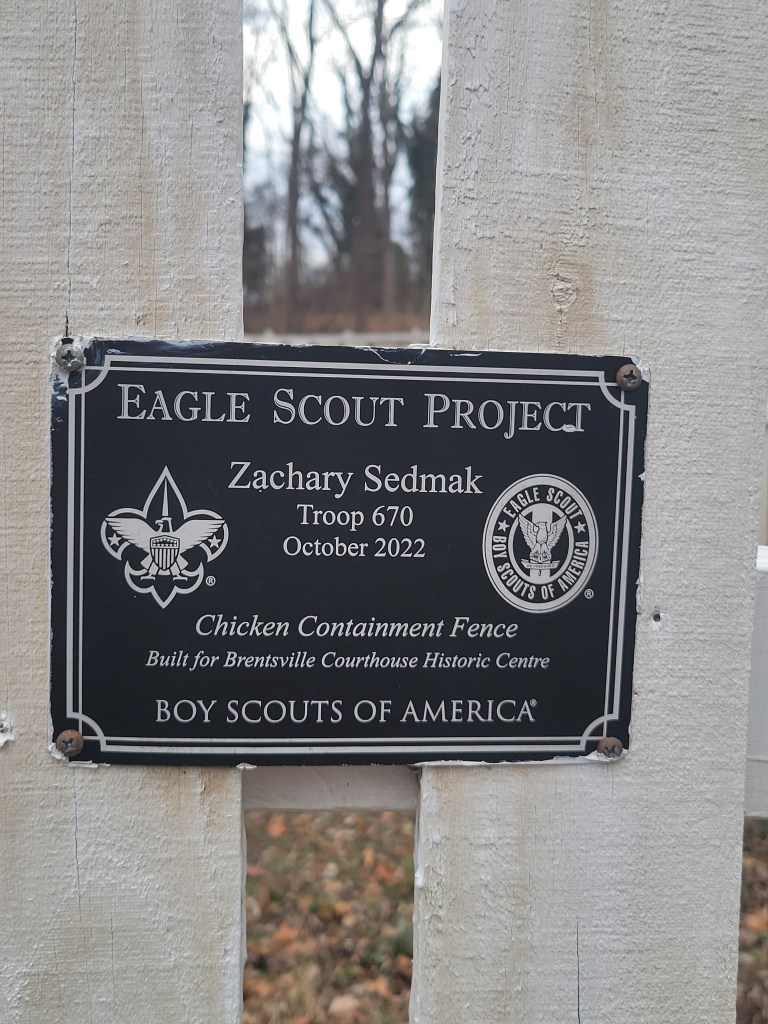
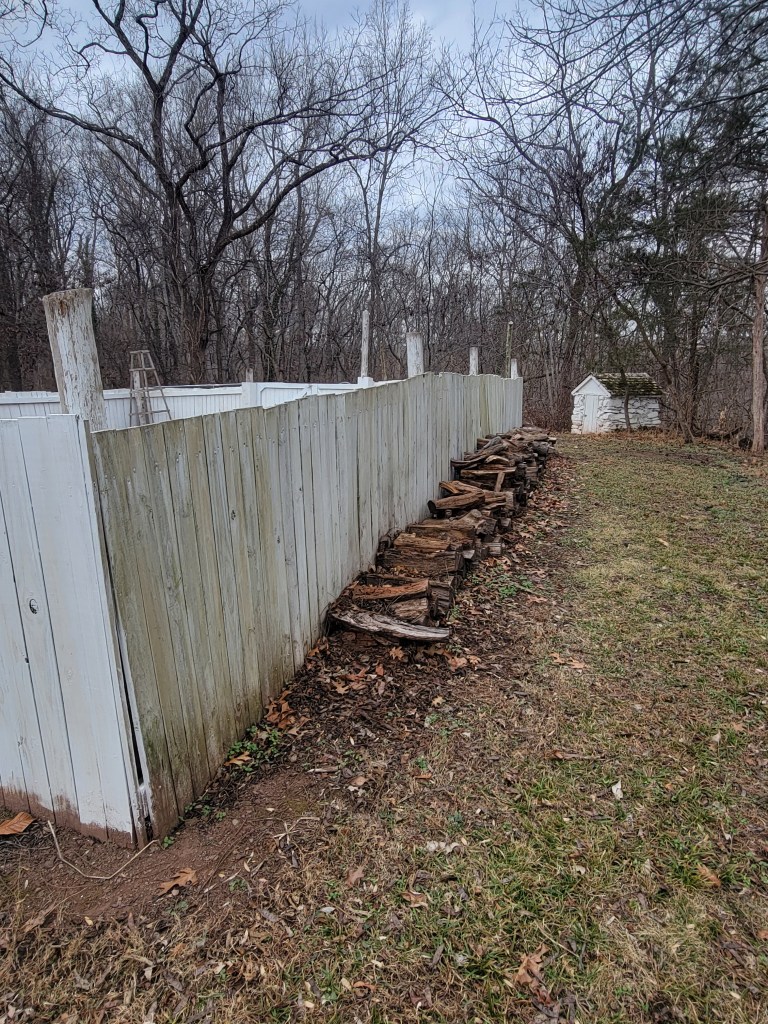
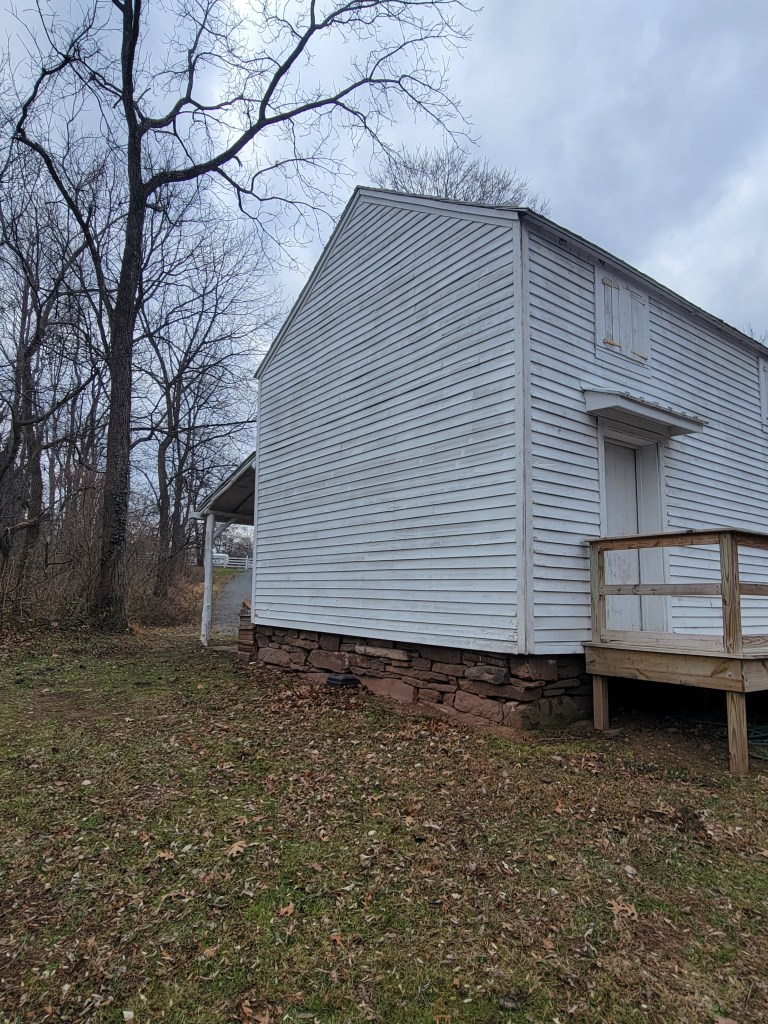
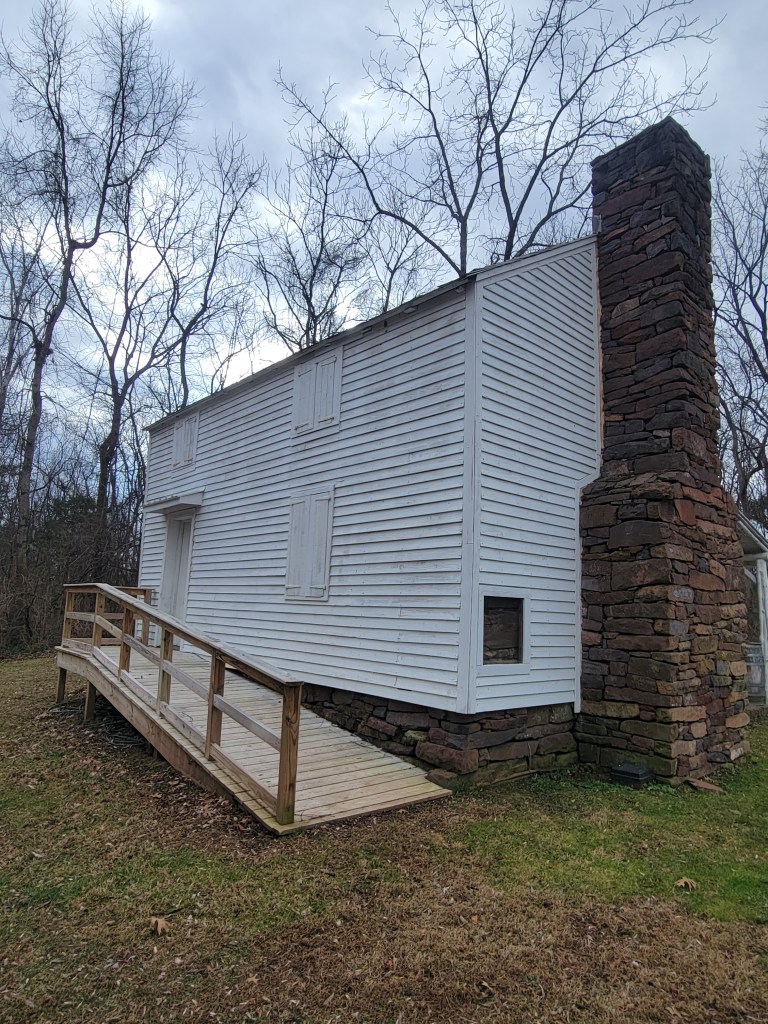
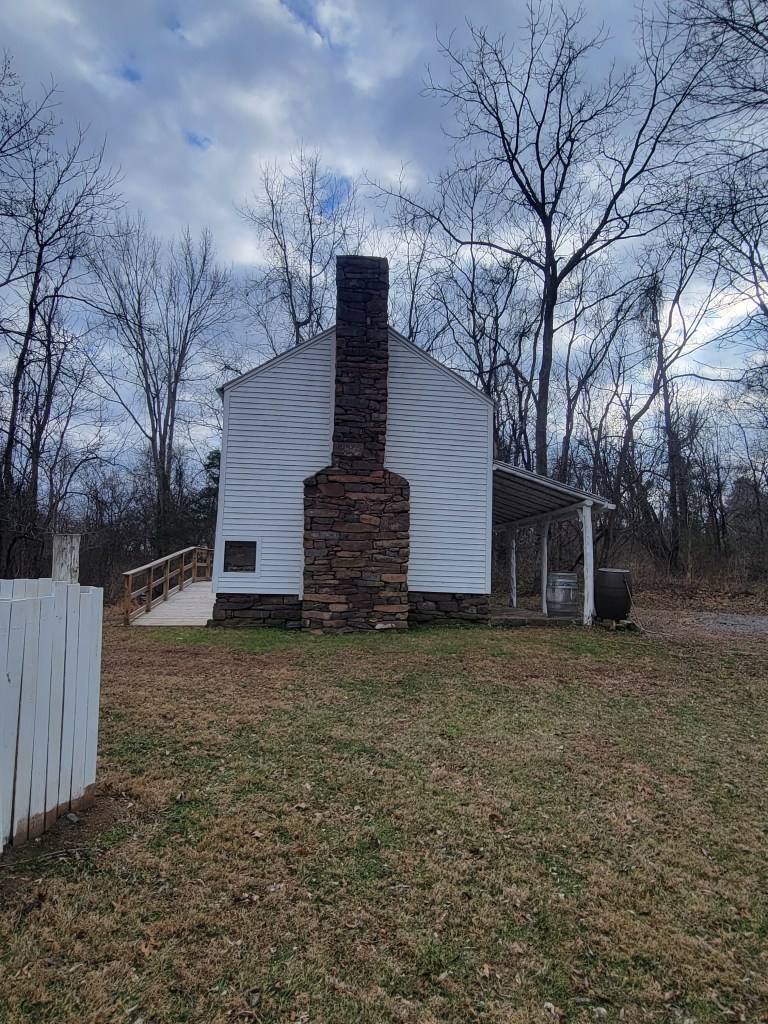
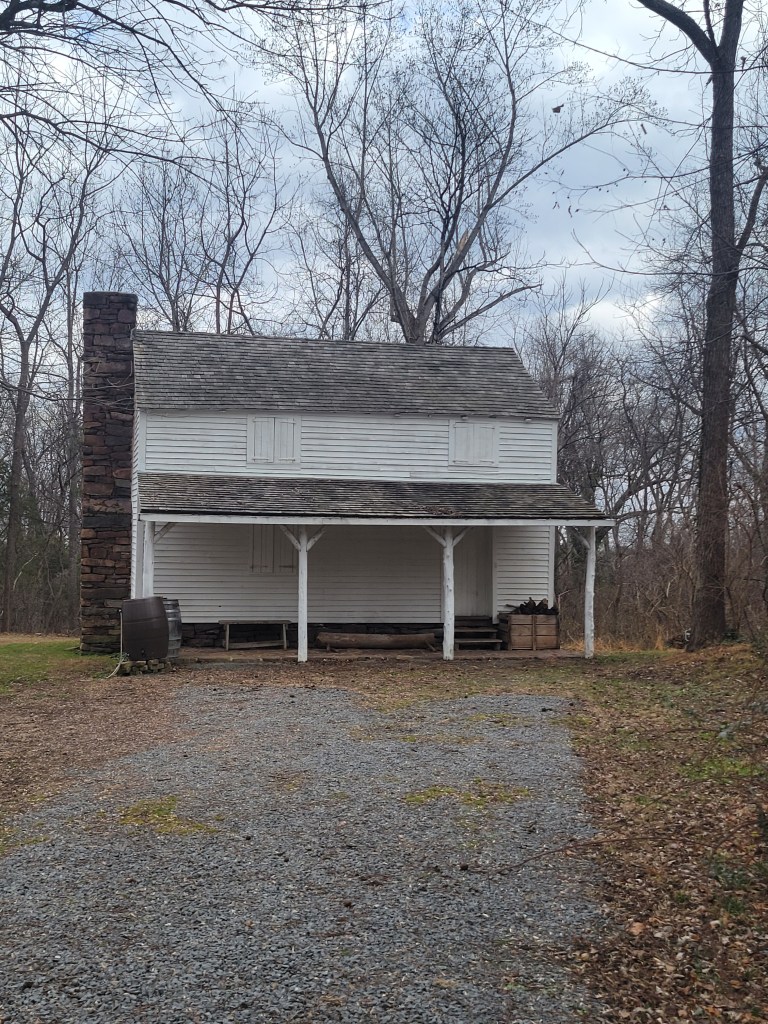
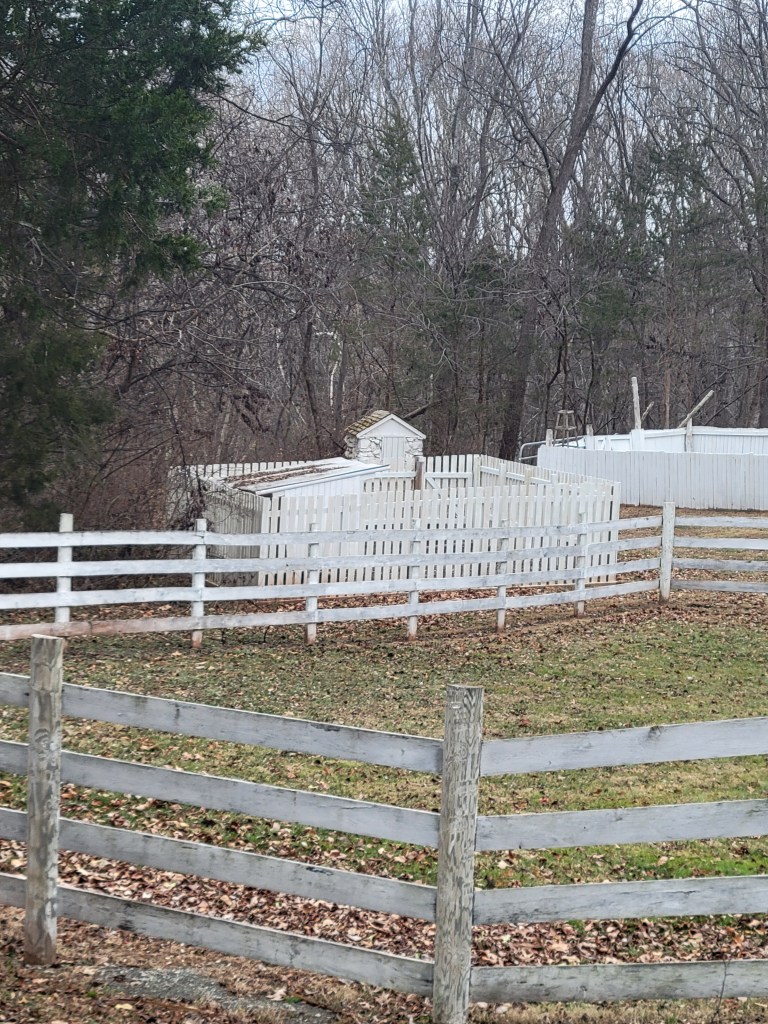
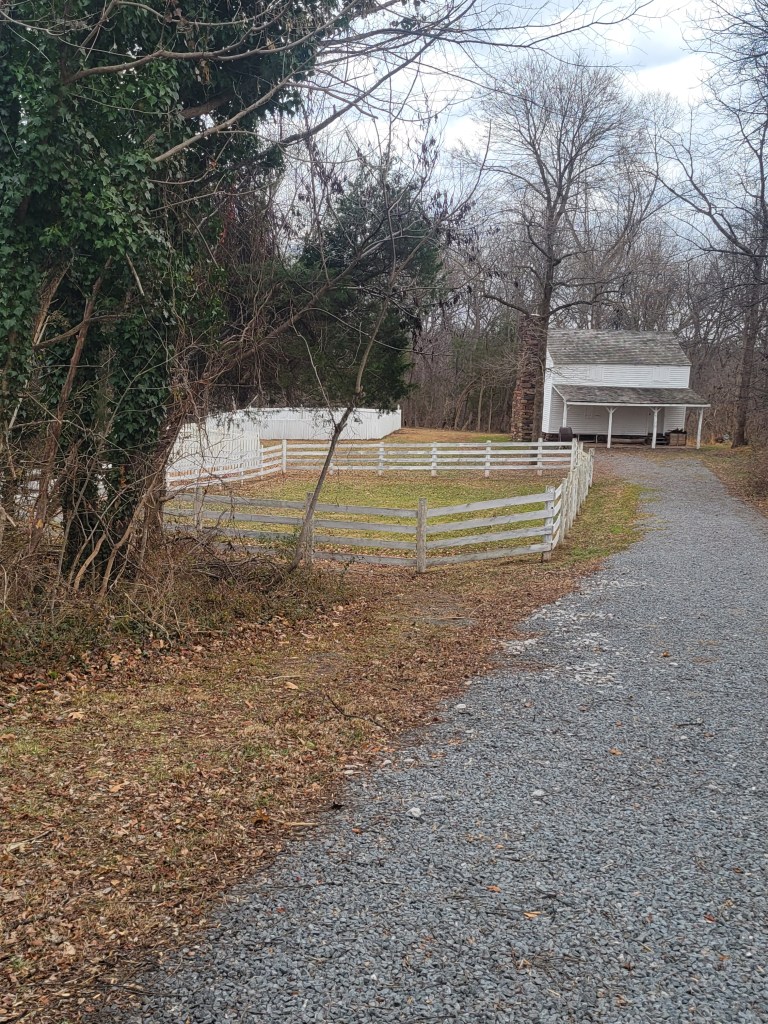
In the 1850s, Brentsville was still the county seat of Prince William County. It hosted court and county business, but the major industry in the area was farming. The Haislip-Hall house is interpreted to represent a 19th century farmstead. Part of the rounds surrounding the house has been fenced off to represent a farm animal enclosure. There are plans to continue to restore the farmhouse’s surroundings to a 19th century farm-like appearance. The building consists of four sections: on the first floor there is a main room (1) to the north of the building which includes a fire place and a hall (2) in between the front and back door, to the left of the back door there are stairs leading up to the second floor which is comprised of a lumber (storage) room (3) on the south side and a bed chamber (4) to the north.3
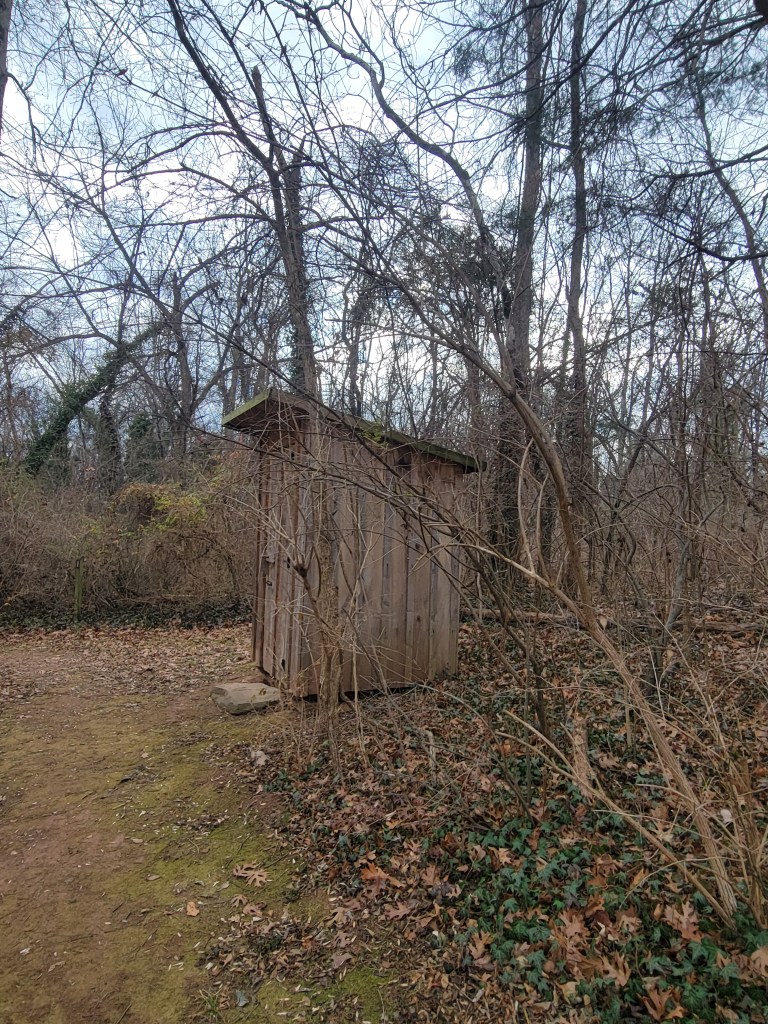
This is what we saw while visiting the Brentsville Courthouse Historic Centre recently.
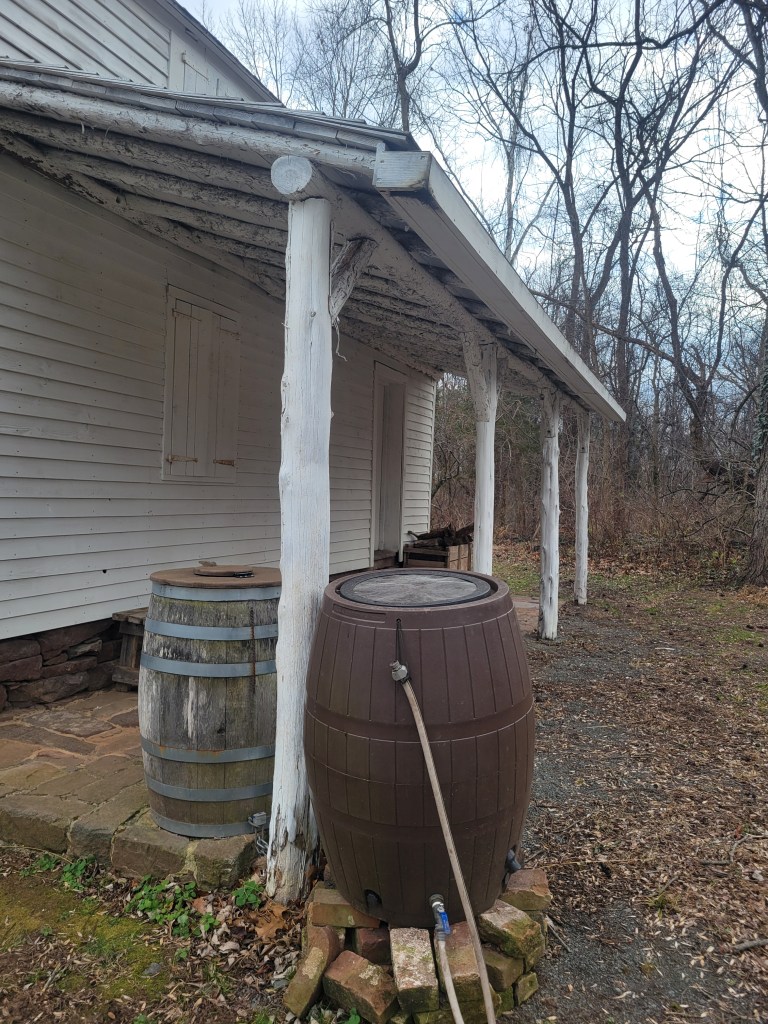
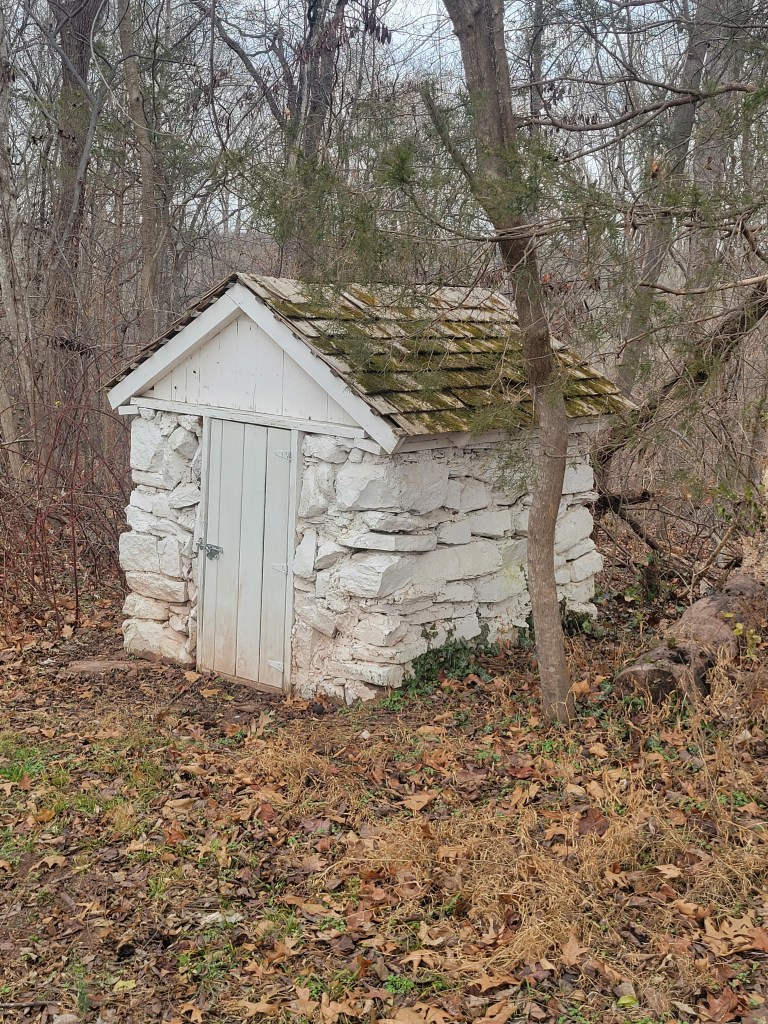
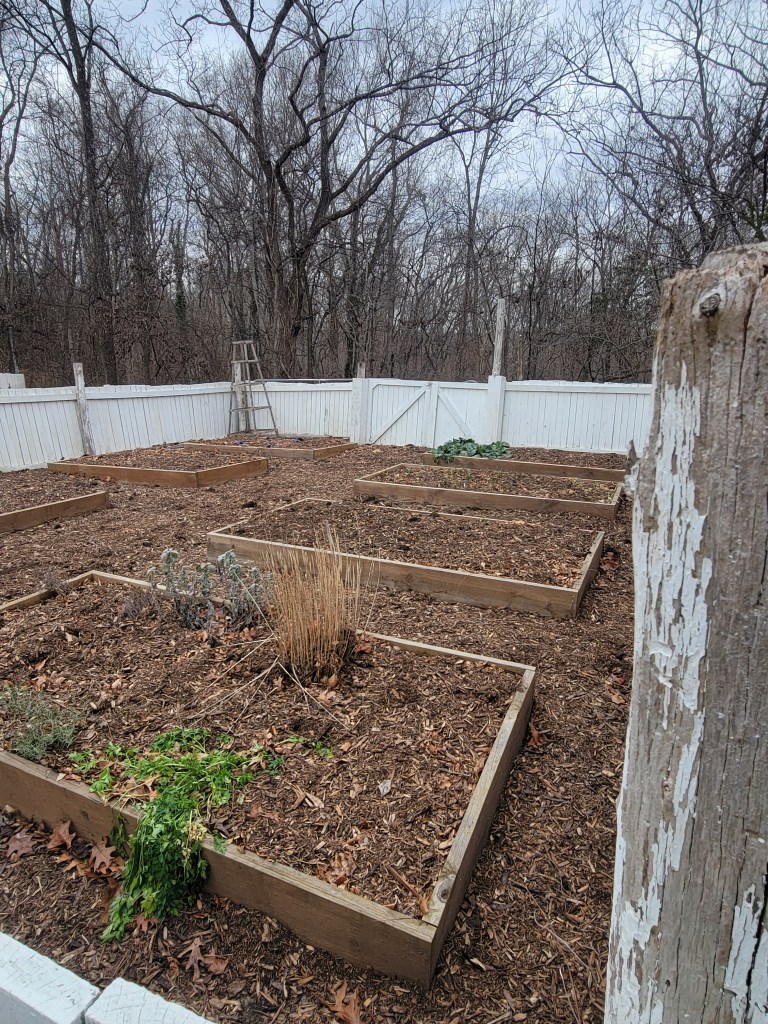
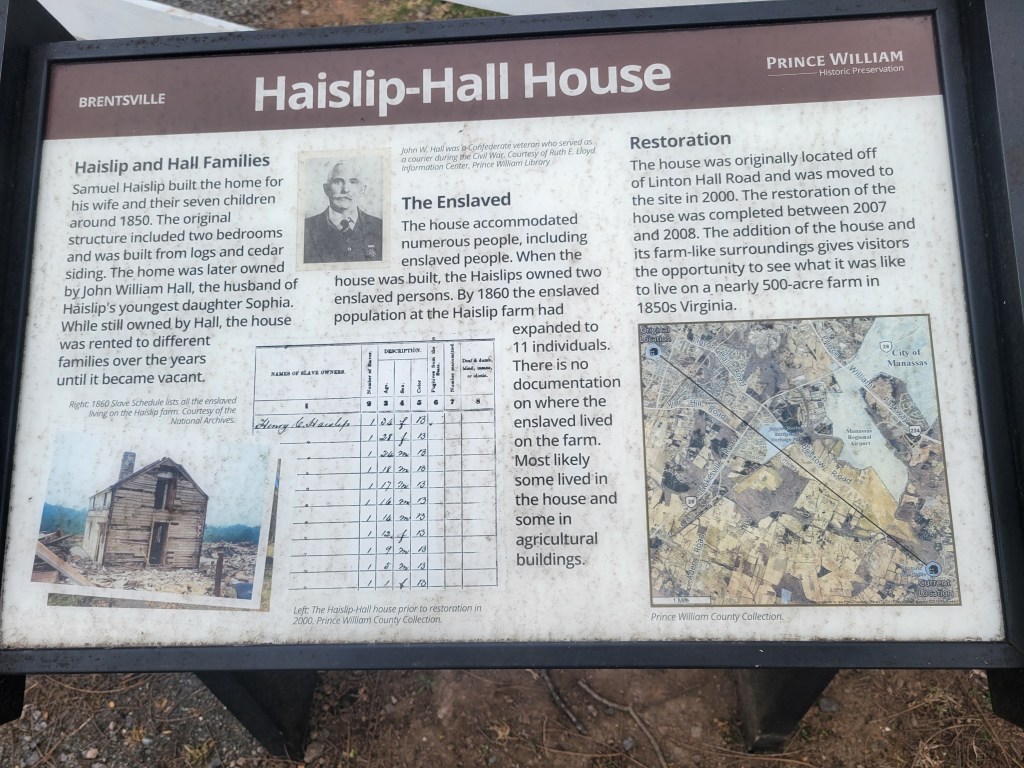
The Haislip Slaves
Samuel Haislip – the 1850 Census Record below indicates he owned one male, age 60 and one female, age 25


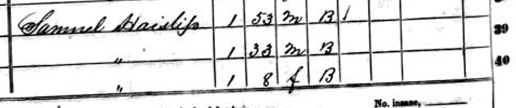
Samuel Haislip – the 1860 Census Record below indicates he owned three slaves, two males aged 53 and 38 and one female age 8.


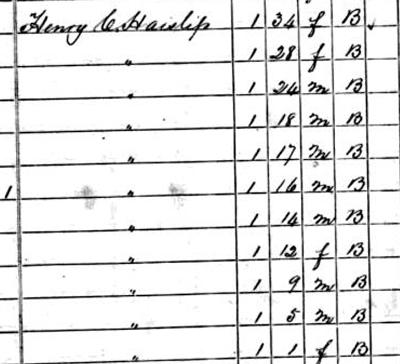
Henry Haislip – the record below indicates that on June 12, 1860 he owned seven male slaves ages 24, 18, 17, 16 14, 9 and 5 and four female slaves ages 34, 18, 12, 9 and 1.

Historical Narrative Haislip-Hall Families – Furnishing & Interpretative Plan Haislip – Hall House by Brentsville Courthouse Historic Centre Historic Preservation Division Prince William County4
In 1838 Samuel Haislip bought 197 acres on Broad Run from Margaret Lee. He owned and used the land hence forth but did not finish building the log house until late in 1850. Around 1836 he married Sophia and together they had seven children. Their first child was Robert Henry born in 1836, followed by Mary, in 1838, James in 1840, Charles in 1842, Anna in 1844, Montafice in 1845, and their last child was Sophia in 1848. Sophia Haislip, the mother, died in 1848 possibly during child birth or shortly after. Unfortunately, this meant that Sophia, his wife, never saw or lived in the house that Samuel built and left him a widower at age 37. Samuel lived with his children in the new house for some time but by 1860 his brother, Henry Haislip and his wife Jane were residing in the farmhouse, in charge of the children’s upbringing. In the 1860 census, Samuel is listed under the household of Lucinda M. Dogan, a tutor, whose husband had died in 1854. Samuel never remarried, but why he was living with a widow who was about 10 years younger than him is unknown. In the 1870 census, Samuel is listed as living with his son, Robert.
By 1850 Samuel Haislip owned two enslaved people, a 60 year old woman and a 25 year old man. It is very likely that the 25 year old enslaved man helped in the construction of the farmhouse. By 1860 when Samuel’s brother Henry was more than likely residing at the farmhouse, Henry is listed as owning 11 enslaved people between the ages of 34 and 1. The oldest enslaved individual, the 34 year old woman is listed on the 1860 Slave Schedule as being a fugitive, so only ten enslaved people were on the Haislip farm. While not a member of the planter class, the Haislip farm contained far more enslaved people than the typical farm in Prince William County. Curiously, no slave quarters are listed on the Haislip farm, suggesting that a few probably spent time inside or lived inside the farmhouse while the rest resided in other agricultural buildings.
Meanwhile, Samuel’s brother, Henry C. Haislip and his wife Jane took care of Samuel’s children since they had none of their own. Because of this, Henry and Jane were probably living in the house that Samuel built since he was living elsewhere. In 1873 Samuel’s daughter, Sophia, married John W. Hall and they both continued to live with Henry and Jane in Samuel’s house. It is interesting to note that when Henry Haislip passed away his obituary thanked his “son-in-law” John Hall for providing the information.
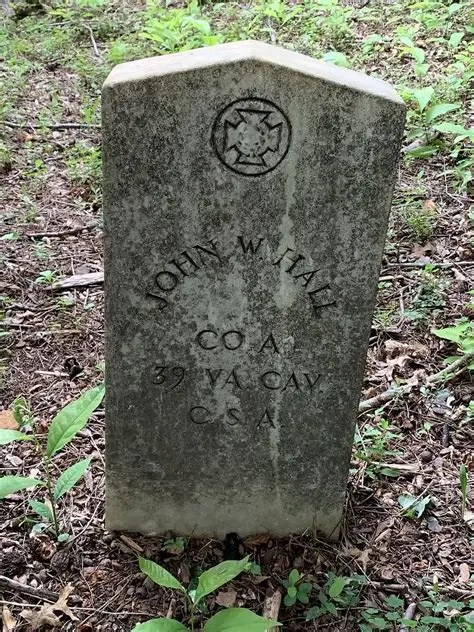
John W. Hall had been born to William T. Hall and Mary A. Hall in 1839 as the third out of seven children. His father worked as a carpenter in Prince William County. Sophia and John married on March 27, 1873. Their marriage certificate states that at the time of their marriage John was 31 and Sophia was 23 years old.
In 1880, Sophia and John had three small children, Henry, Elizabeth, and Charles. At the time they were all living with Henry and Jane. In addition there was also a mulatto farmhand named John Lambert, and two other women listed in the household.
In 1885, Samuel Haislip, who still owned the land and the house, deeded it to his son-in-law, John W. Hall. So from then on, John and Sophia’s family were the main inhabitants. The census from 1890 has been lost, but by 1900 John Hall was a widower and his house was a home not only for his children, but his sister Elizabeth, his brother-in-law James Haislip, a ward, a cook, and an aunt. For a second time, a total of ten people lived in the Haislip- Hall house
Starting in 1924, John rented some of his property to the Bailey family. They lived in the house that had been built and connected to the original log house. Mr. Martino was a farmer and one of his daughters, Hazel Bailey Martino recalls that at the time she lived there the original house was furnished as a summer kitchen, “it had a stove, chairs and a couch” (Martino). The Baileys lived there until John sold the land in 1930 to Mackall and Edward Hansborough.
John Hall died on August 10, 1931 at the age of 91.
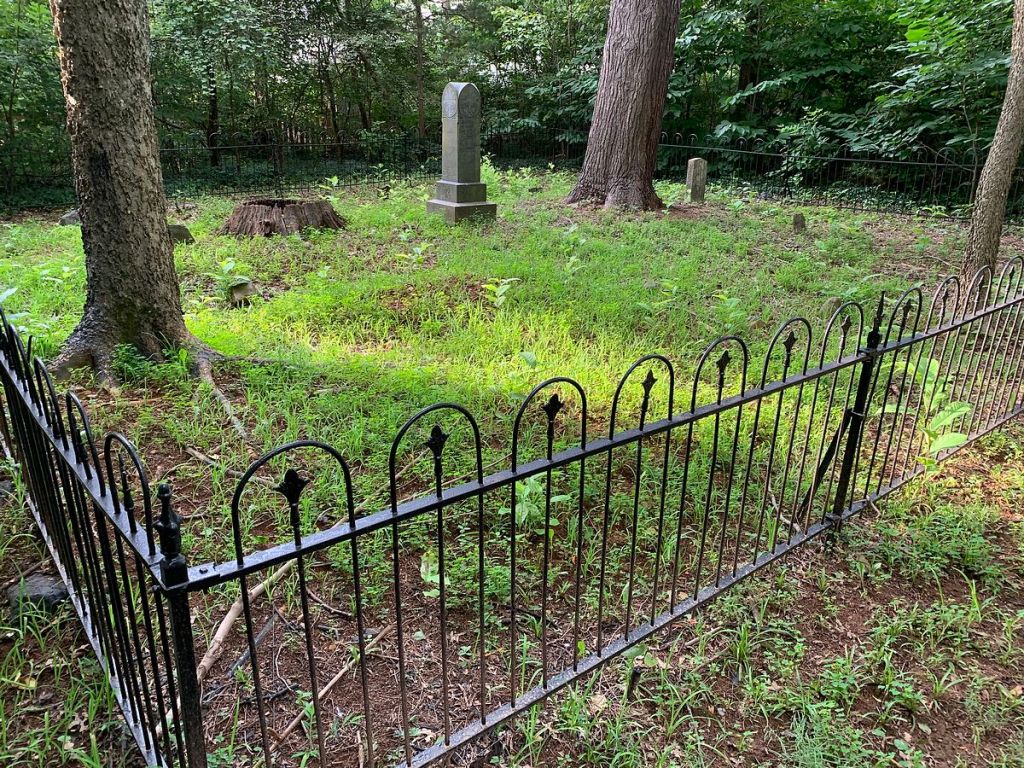
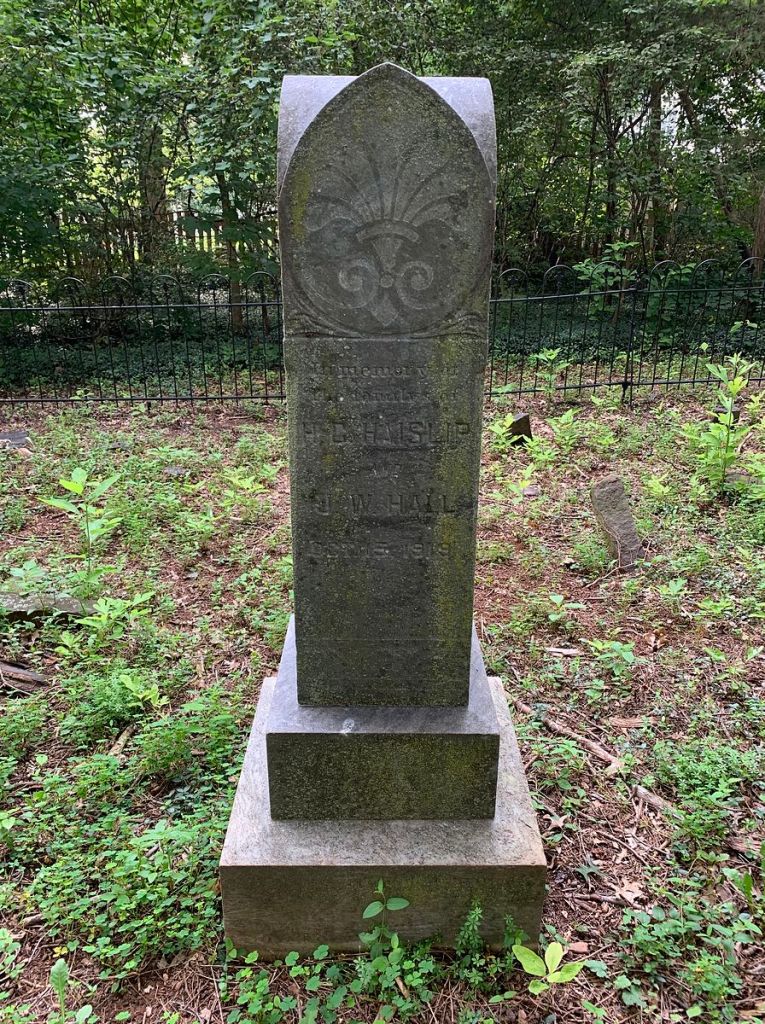
Haislip Hall Cemetery 9351 Weathersfield Drive
Bristow, Virginia 20136 United States
- National Register of Historic Places Registration Form Page 1 ↩︎
- Prince William County Office of Historic Preservation’s Facebook Post – May 17, 2024 ↩︎
- Furnishing and Interpretative Plan for the Haislip-Hall House at Bristow, VA, Prince William County Department of Public Works – Historic Preservation Division Page 1-2 ↩︎
- Pages 3-4 ↩︎
 Mairi & Dave's Gallivant Through Virginia and About