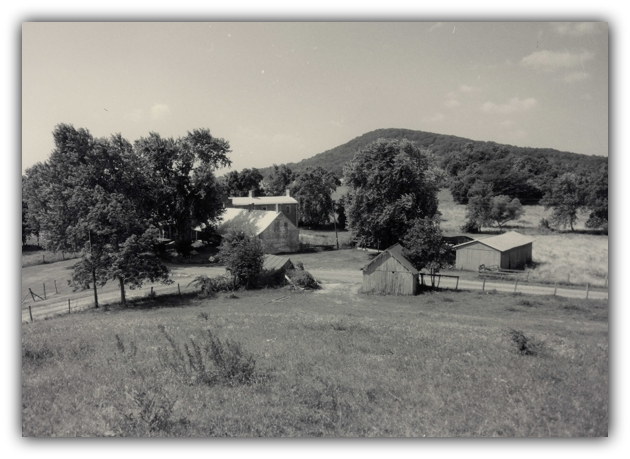
We had run across, in researching several of the very early Anglican Churches we visited and wrote about, the fact that most services within the Virginia counties, prior to American Independence, were maintained by the local parishes. The Church of England was legally established in the colony in 1619. In practice, establishment meant that local taxes were funneled through the local parish to handle the needs of local government, such as roads and poor relief, in addition to the salary of the parish ministers. Seeing the Frederick County Poor Farm on the National Register of Historic Places piqued our interest, and we headed west for a visit. Most of what we have shared below has been sourced through the National Register of Historic Places Continuation Sheet. What we saw was well worth the trip.
HISTORICAL BACKGROUND
National Register of Historic Places Continuation Sheet – Prepared by (historian), John S. Salmon
The land now occupied by the Frederick County Poor Farm was granted to William Hoge by Thomas Fairfax, sixth baron Fairfax of Cameron, the proprietor of the Northern Neck, on 13 March 1752. Hoge conveyed the land to David Denny on 20 March 1764, and Denny’s heirs later sold it to William Holliday. On 16 September 1790 Holliday conveyed the land and the buildings then on it to his son Robert Holliday. In 1802 Robert Holliday died, leaving the property to his mother for life, and after her death to his brothers and sister. His sister, Jane Holliday Smith, was the wife of Fleet Smith, of Leesburg, in Loudoun County. Fleet Smith bought out the other heirs, and by 1816 he and his wife owned the entire tract. On.15 January 1820 the Smiths sold the property, consisting of two tracts totaling about 322 acres, to the Overseers of the Poor of Frederick County and the corporation of Winchester. Buildings worth $562.50 stood on the property.1
During the colonial period in Virginia the Church of England cared for the poor through the parish vestries. The vestries distributed part of the money collected by the church either to the poor directly as a form of relief, or to other persons paid to house and feed the poor or infirm. In 1755 the House of Burgesses authorized the parishes to establish poorhouses, but few did so. By 1785 the General Assembly required each county to create a committee called the overseers of the poor to replace the parish vestry in that function. At first appointed and later elected, the overseers operated the poorhouse, bound out orphans and illegitimate children as apprentices, and accounted for the funds they distributed for the care of the poor. Gradually the idea of concentrating the poor in workhouses or poorhouses gained acceptance, particularly among the overseers, as a cost-effective means of caring for and controlling the poor and infirm.2
Each parish in Virginia had a farm and house (a glebe) set aside for the use of the minister. After disestablishment, the General Assembly enacted laws that authorized localities to sell the glebe lands belonging to the parishes and apply the proceeds to the care of the poor. If the parish still had a rector, however, the sale could not take place until after his death. Such was the case in Frederick County, where the rector of Frederick Parish did not die until 1822. The glebe land was then sold, and the money applied to the debt created by the construction of the county poorhouse.3
The concept of the poorhouse developed by the late eighteenth and early nineteenth centuries from popular assumptions about the nature of poverty and the character of the poor. Every citizen, it was thought, had an obligation to work, to support himself, and to cultivate the discipline and habits that would enable him to be a productive member of society. Those who did not work and fell into poverty were categorized as “deserving” or “undeserving” of public charity. The deserving poor were those who could not work, whether because of age, physical disability, or mental condition. The undeserving poor were those perceived as too lazy to work (vagrants and idlers) or in the grip of such vices as drunkenness or “dissipation.” Both groups might be helped by living in poorhouses: the deserving poor would be protected and the undeserving might be reformed.
Alternatives to the poorhouse existed but were viewed as less effective of the desired results. If the poor were left at home and given a cash dole they might spend it unwisely or on liquor. If the poor were themselves doled out to private citizens to be cared for, and the money given to the caretakers, they would have no incentive to improve themselves. Only by collecting the poor in one place, housing them, and putting them to work to provide at least some of their own subsistence could the deserving be helped and the undeserving rehabilitated.
When the American Revolution ended with the Treaty of Paris in 1783, aid for the poor differed in varying states. In Virginia, which recognized the Anglican Church as its official church, Anglican parishes distributed relief. In 1785, however, with the enactment of the Virginia Statute for Religious Freedom, Virginia’s parishes lost this responsibility as the state ceased recognizing an official church. Instead, the poor became charges of county governments.
Frederick County constructed its first poorhouse in partnership with the city of Winchester in 1793-1794. The overseers of the poor bought a lot on the edge of Winchester from Christopher Fry on 6 November 1793. Construction dragged on for several years, but by 1797 the building was completed. This poorhouse, which stood near the intersection of present-day Fairmont Avenue and Picadilly Street in Winchester, served the community for more than two decades until the poor farm site was purchased.4
In 1829 the General Assembly passed an act requiring each locality to report to the state auditor of public accounts on the condition of the poor since 1800. Lemuel Bent, clerk of the overseers of the poor for Frederick County and the corporation of Winchester, wrote his report on 9 November 1829. He wrote that the poor were cared for in the house constructed in 1793 “until the year 1819, when it was thought advisable by the Overseers, then in office, to purchase a farm. Accordingly, they purchased a tract of land about four miles from Winchester, at ten thousand dollars, paying six thousand dollars in money, and giving the Poor house at four thousand dollars. On this farm commodious buildings were erected for the accommodation of the Poor. These buildings with the Stock and farming untensils [sic] which it was necessary to procure cost between six and seven thousand dollars. To this establishment the poor were removed in the same year. And the advantages that were anticipated by removing the poor to the country have been realized.”5
Not all of the county’s needy could be confined at the poorhouse, Bent noted. An increasing number still were maintained “out of the Poor House,” by direct financial assistance. Bent also reported that “the number of Paupers has increased in a greater proportion tha[n] the population. The causes of this increase is believed in some measure to be, the introduction of more expensive and luxurious habits of living among the thriving and affluent portion of the community, which the poorer class too frequently endeavor to imitate, thereby acquiring habits of idleness and intemperance, bringing on the inevitable consequences, poverty and ruin to themselves and their families. These causes, these habits, and these consequences are the certain results of a prosperous state of society; and for which there is no remedy, nor can be until the nature of man is changed, unless some plan can be devised to counteract them.”6
Bent then presented his formula for reforming the undeserving poor: “If there was combined with our Poor establishments, work houses and houses of correction for idlers, Vagrants and drunkards, its effects, it is believed, would be salutary. If such persons found that by going to the Poor house they would be compelled to work, they would not so readily go there, but would work at home. If drunkards were taken up, put to hard labor, and kept upon low diet as a punishment, there would not be so many of them seen. Establishments of this kind would be, at first, expensive, but there can be no doubt, that its effects would be beneficial and lasting.”7
Bent’s suggestions were not formally accepted by the state, but apparently were in use at the Winchester poorhouse, according to a set of “Ordinances, Rules and Bye Laws” adopted for that establishment before 1818. The poorhouse manager maintained discipline by confining “unruly, disorderly, or stubbornly perverse” inmates to a “dark room” and a diet of bread and water. He enforced rules against feigning sickness or lameness in order to escape work, as well as begging for money or favors. He issued passes to inmates for occasional liberties and could confine inmates to the poorhouse for violations of the rules. No doubt similar regulations were put in effect and continued for years at the poor farm after it was built.8
The number of poor persons at the new facility increased during the 1820s to about fifty-five or sixty. During the same period the number of persons boarded outside the poor farm rose to 52 in 1826. According to the 1850 census, the farm housed forty-one inmates: thirty-two whites and nine blacks. Seventeen inmates were males and twenty-four were females, and their ages ranged from one to eighty-eight years. Three inmates were described as “idiots”, three as blind, and one as deaf and dumb. In 1860 forty inmates lived at the farm (thirty-three whites and seven blacks). Seventeen were male and twenty-three female, and the ages ranged from one month to 107 years. Ten inmates were described as “idiots, ” one as blind, and one as deaf. Probably most of the inmates were too old, too young, or too disabled to work. This fact reduced the ability of the institution to be self-supporting; it required the superintendent to spend part of his time farming and necessitated the hiring of farm workers. The 1820 poorhouse acquired a rear ell in the 1850s, and over the years other buildings, including a springhouse, dwelling, and blacksmith shop, were added.9
By 1900 the number of poor at the farm had dropped dramatically, probably because of an increase in home care and the availability of institutions for the mentally ill. The farm housed only fourteen inmates, eight whites and six blacks. There were eight males and six females, and the ages ranged from six to eighty-seven years. By 1926 only nine inmates remained at the farm.10
In 1926 the State Board of Public Welfare issued a report titled The Disappearance of the County Almshouse in Virginia: Back from “Over the Hill.” The report discussed the history of the local poorhouse from its colonial origins to the early twentieth century and concluded that the poor could be better and more economically cared for in a system of district homes. Some thirty-three localities had closed their poorhouses by 1926, and only 1,143 inmates remained in the hundred still open. The report credited many of the poorhouse superintendents with genuine concern and kindness toward the inmates but concluded that the system had been overwhelmed by age and inefficiency.11
The district home concept did not catch on throughout the state, and the Frederick County Poor Farm remained open until 1947, when it was closed and sold to Boyd V. Unger. In 1968 the Unger family sold the farm to Fruit Hill Orchards, Inc., the present owners. 12
Only one local poor farm, that in Shenandoah County, remains open today. Most of the others have been demolished and the land converted to other uses. The Frederick County Poor Farm, constructed some 170 years ago, remains as a rare survivor and example of the poor farm era.
ARCHITECTURAL SIGNIFICANCE
Excerpts from the National Register of Historic Places Continuation Sheet – Jeffrey M. O’Dell architectural historian
The poorhouse was erected in 1820, as testified by a marble commemorative plaque near the top of the north chimney. The builder is not known.
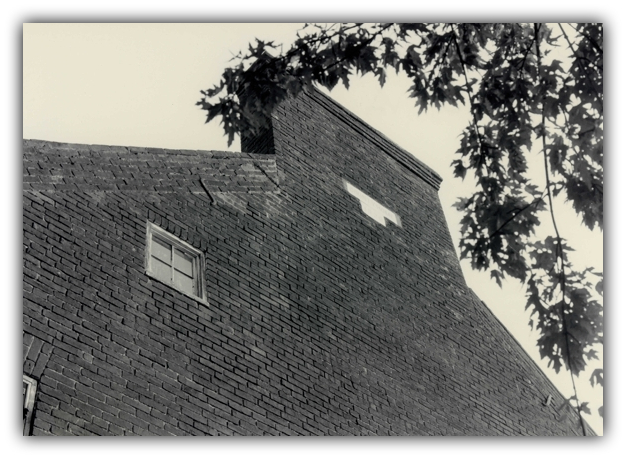
The Frederick County Poor Farm, located in a rural area of central Frederick County, is a complex of buildings in an attractive rural setting of hills and pasture land. The main building, erected in 1820, is both the oldest and best-preserved such structure in Virginia. Similar in form to the main building at the somewhat later Shenandoah County Poor Farm, it features a two-story brick main block and original lateral one-story brick wings. Other buildings and structures on the farm include an early-nineteenth- century brick springhouse, a mid-nineteenth-century frame dwelling, and a late-nineteenth-century or early-twentieth-century blacksmith shop. There are also a number of twentieth-century farm structures, most of them underused and deteriorating.
THE MAIN BUILDING
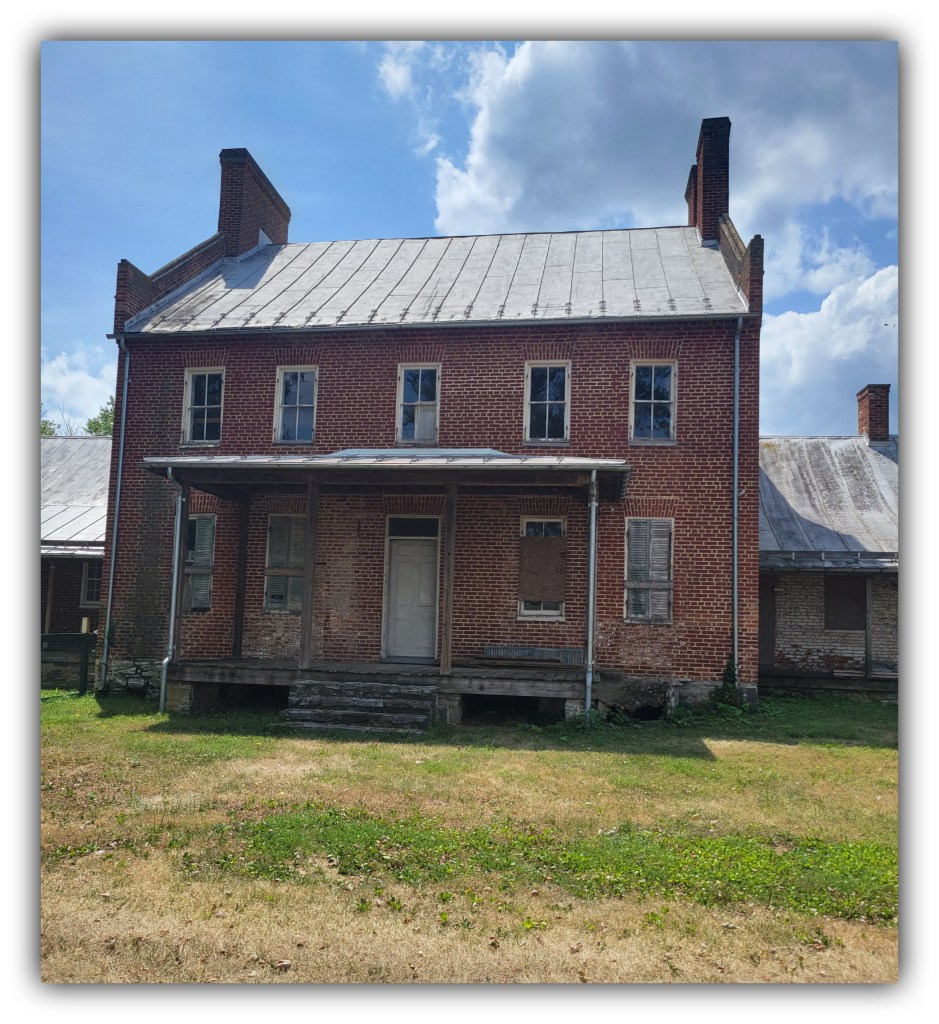
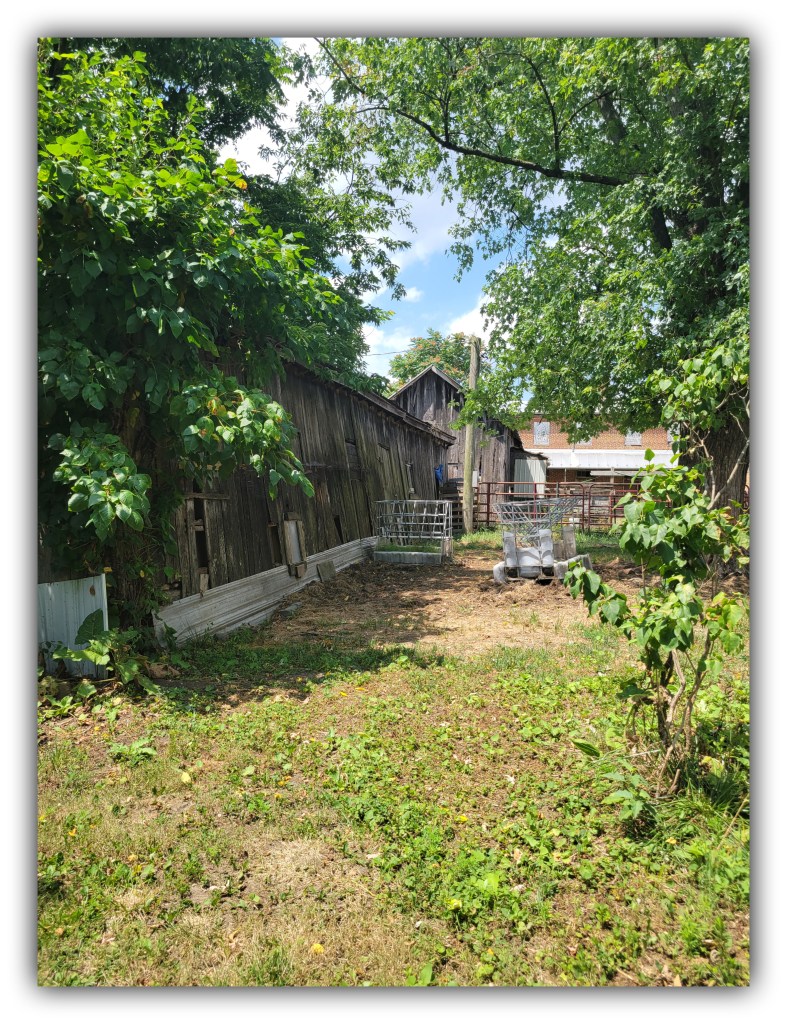
The focal point of the Poor Farm is the main building, a large, one- and two-story brick poorhouse with gable roofs. An irregular string of outbuildings, all facing the same direction as the house, extend on either side. A group of tall hardwoods shade the front of the house, which faces east.
The floor plan of the main block is unusual. The five-bay front is symmetrical, but there is only one door, which enters the larger of the two rooms. Although there are four rooms on the main floor, there is no passage. One would think this awkward, but apparently it served the original occupants well enough. The original enclosed, straight-run stair is tucked against the inner walls of the main (northeast) room. This leads to a narrow landing where the stair divides, leading to rooms on the left and the right. Upstairs, this stair is enclosed by vertical beaded boards. A fixed, six-light sash window is fitted into the board wall in the east room to admit light to a stairway that might otherwise be pitch black.
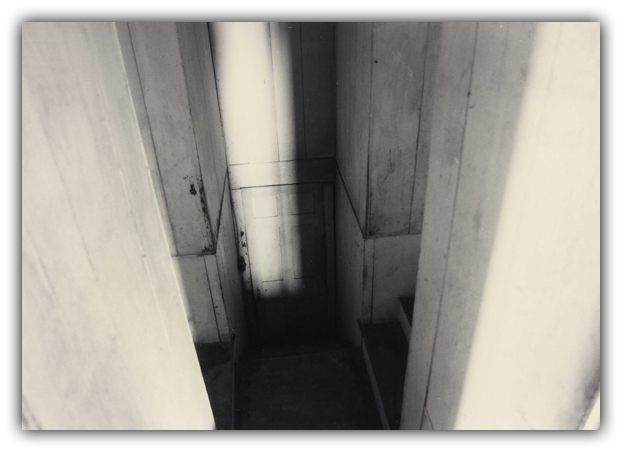
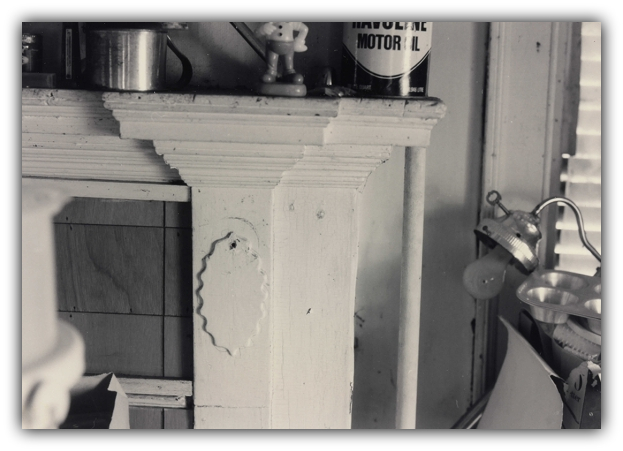
Interior detailing remains largely intact. It includes Federal-style mantels in each of the rooms. Those upstairs are plain but with good proportions. Those downstairs have rudimentary decoration: an oak leaf and a star on the mantel in the north room, and gouge work resembling triglyphs in the south room. Original baseboards, chair rails, and window surrounds survive in all rooms.
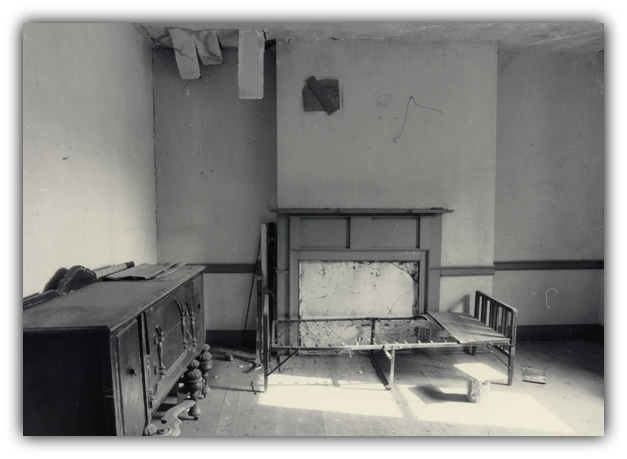
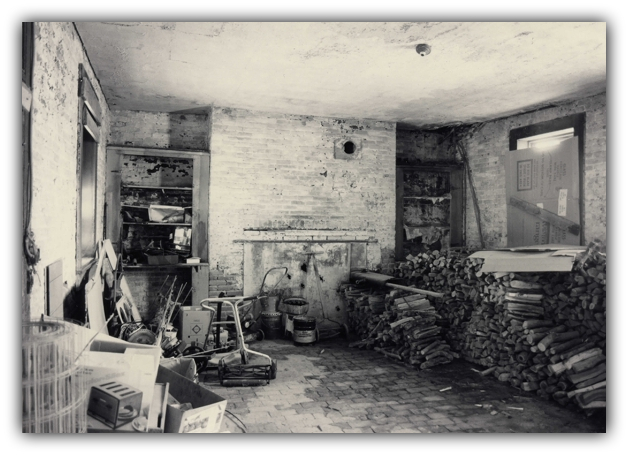
Extending from the main block at either gable end are original brick one-story wings. At the front, they are set back about ten feet from the main block, and in the rear there is a one-foot setback. Early if not original shed-roofed porches run the length of these wings. Detailing includes square posts with chamfered tops.
The plan of each wing consists of five rooms in a row. Four of the rooms share two chimneys, and the end room is served by a single exterior chimney flush with the exterior wall. Some of the rooms communicate, but these openings are probably later. Each room has an exterior door, creating a row of single-room apartments.
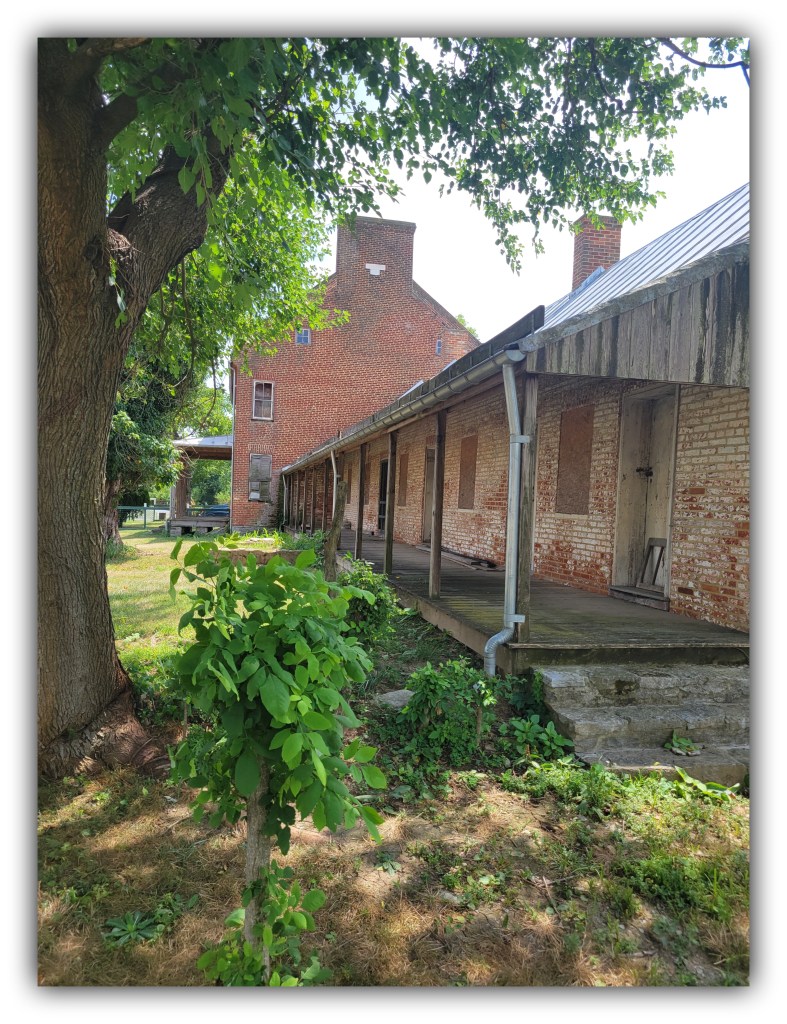

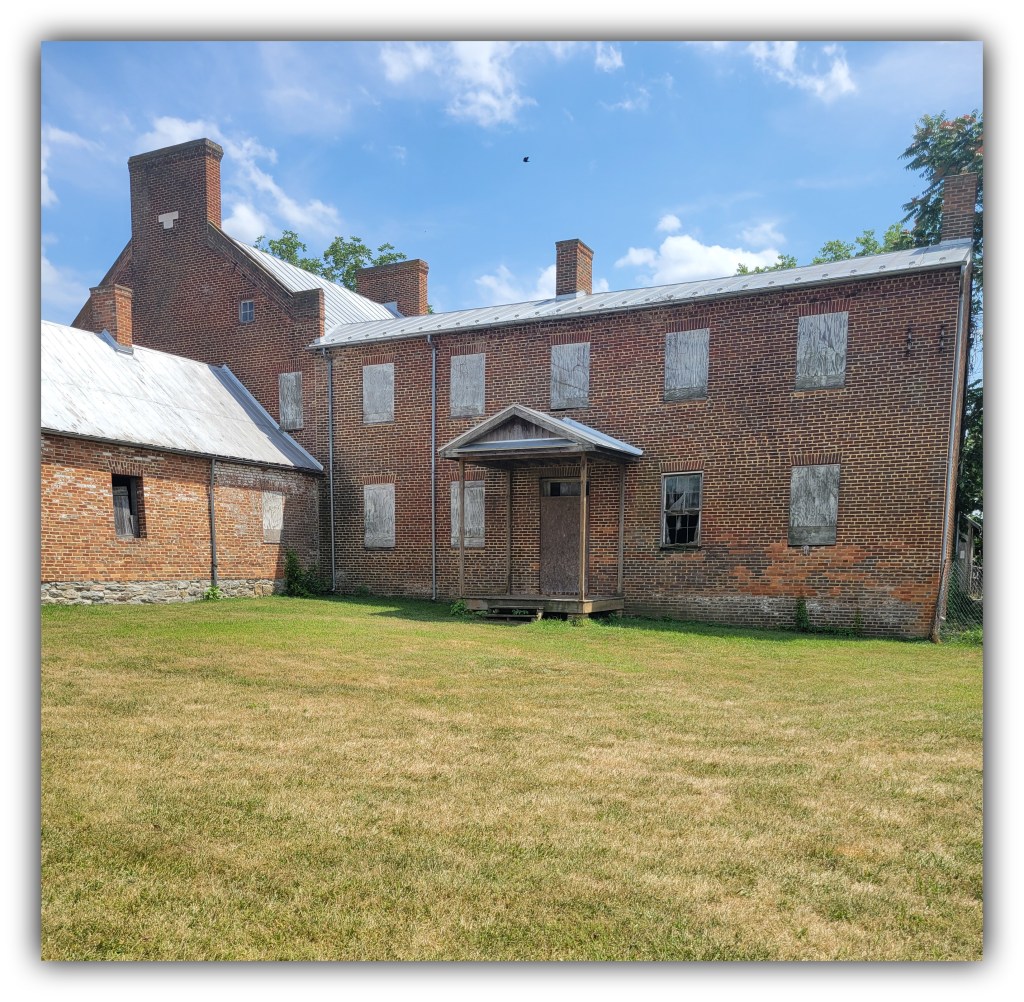
Two or three decades after the original building was erected, a two-story ell was built at the rear. It has a much shallower roof pitch than the older sections. The five-bay front features windows with the typical jack arches of the period, with barely enough splay to support the wall above.
The two-room plan features a central, enclosed, straight-run stair that allows private entry to each of the rooms. The western, or outer room, may have been a kitchen; the original brick floors remain there. The walls of both rooms are unplastered (they were whitewashed or painted in later years.) Upstairs, in contrast, the rooms are plastered. Both upstairs rooms have plain Greek mantels.
The oldest support building at the Poor Farm is a brick springhouse located about a hundred yards south of the main house. It is a typical building of its type, with a gable roof and squarish, one room plan. There are no windows, only a front door. Ventilation is supplied by a number of slits in the walls.
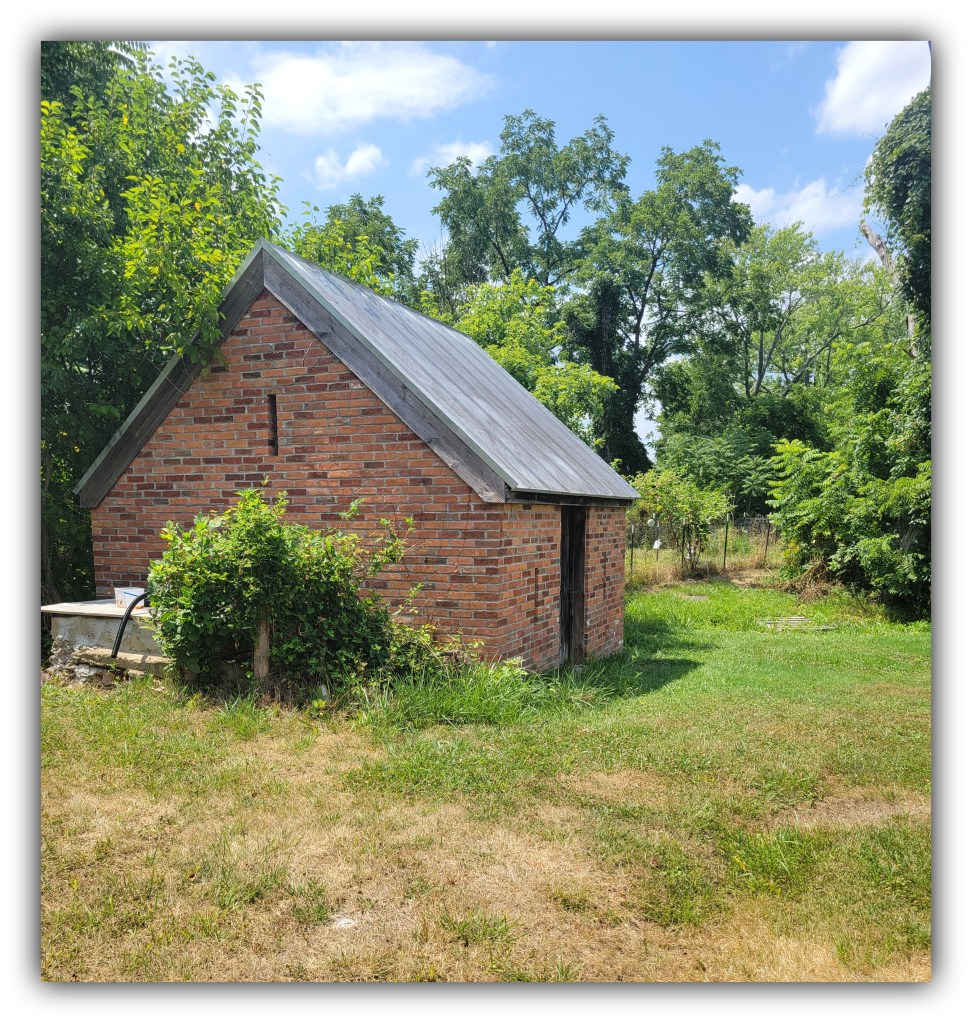
Having been built adjoining a spring which continues to bring water to the surface, the building has not fared well. The northwest end, next to the spring, has two large diagonal faults in the brick wall; they run from the eaves almost to ground level. No doubt these were caused by subsidence of the rubble-stone foundations.
The third-oldest building on the property is the secondary dwelling located about seventy-five yards southwest of the main house, and on axis with it. Built in the mid nineteenth century, it no doubt served as additional lodgings for the farm’s residents.
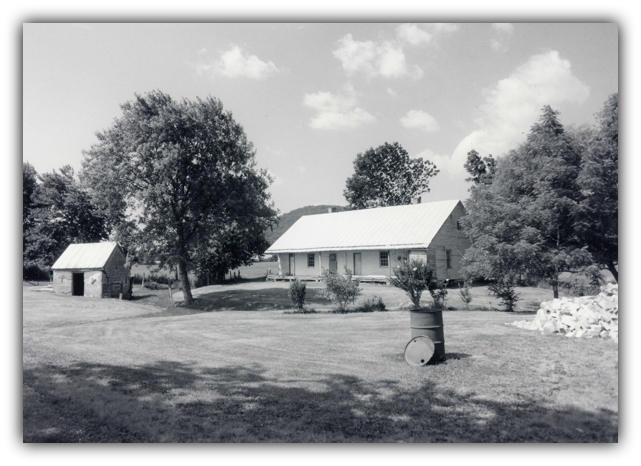
The blacksmith shop stands about seventy-five yards north of the main house, beside the farm road leading northeast. Probably built in the early part of this century, it is a one-story frame building with a gable-end front and a rather steep-pitched gable roof.
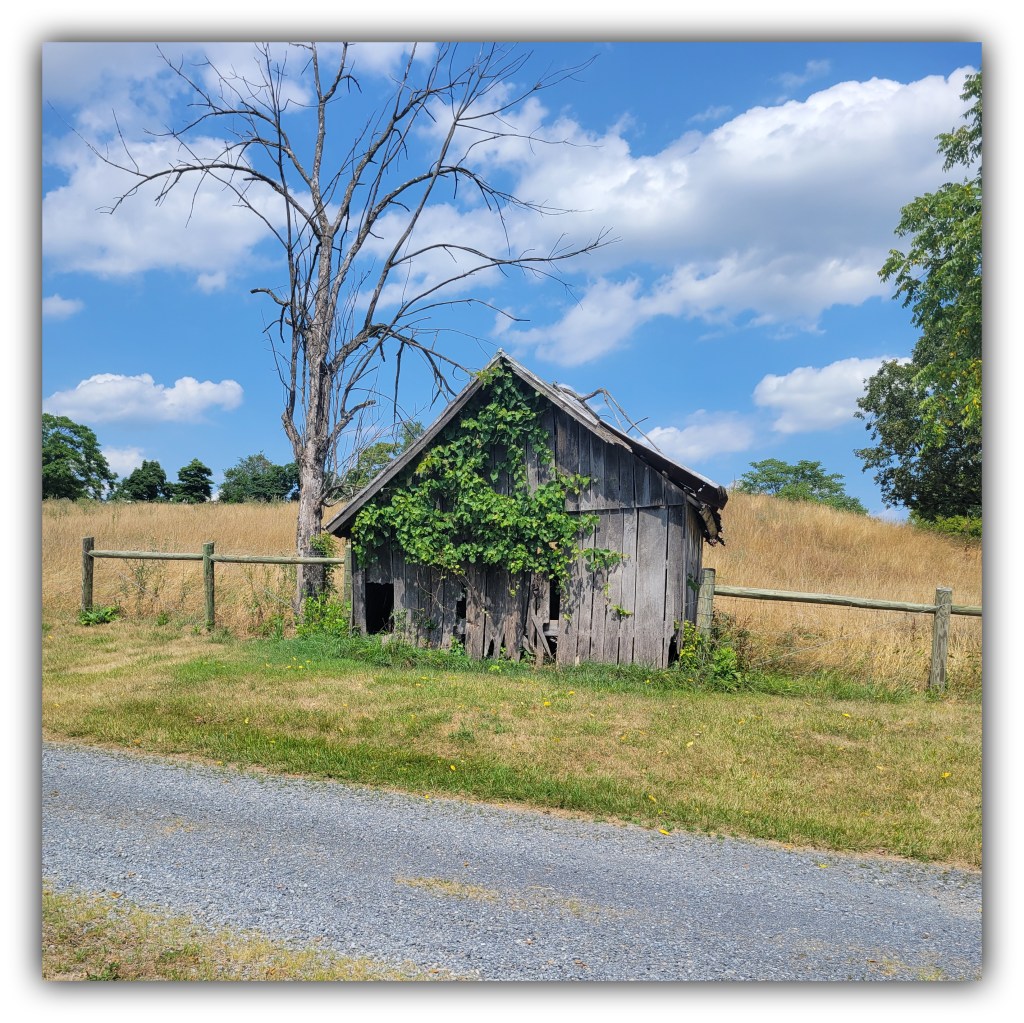

The property has a number of supporting farm structures, all of them twentieth-century, and all of frame construction. Just northwest of the poorhouse is an equipment storage building consisting of two gable-roofed units joined by an open shed for vehicle storage. A small poultry house stands along the road to the modern farm buildings. Just south of the poorhouse stands a board-and-batten outbuilding of uncertain purpose. Two other nearby buildings are noncontributing, either because of their ruinous condition, or their late construction date.
- Garland R. Quarles, Some Old Homes in Frederick County, Virginia (N.p.: Garland R. Quarles, 1971), 232-233; Frederick County, Deed Book 43, 1820-1821, Reel 23, pp. 266-270, VSLA; Auditor of Public Accounts, Land Tax Book, Frederick County, 1820, Archives Branch, Virginia State Library and Archives (VSLA). ↩︎
- Auditor of Public Accounts, Overseers of the Poor, Annual Reports and Checklist, 1800-183 0, Frederick County, “Report of the number of the Poor, the manner and annual expence of their Maintenance, as far as it can be ascertained from the records, in the County of Frederick, from the 1st day of January 1800 to November 1, 1829,” VSLA. Hereafter cited as “Report of the number of the Poor.” ↩︎
- Auditor of Public Accounts, Overseers of the Poor, Annual Reports and Checklist, 1800-183 0, Frederick County, “Report of the number of the Poor, the manner and annual expense of their Maintenance, as far as it can be ascertained from the records, in the County of Frederick, from the 1st day of January 1800 to November 1, 1829,” VSLA. Hereafter cited as “Report of the number of the Poor.” ↩︎
- Frederick County, Deed Book 24-A, 1793-1794, Reel 13, pp. 313-315, VSLA; Frederick Parish Vestry Book, 1764-1780, 1818, Acc. 19745, VSLA; Quarles, Some Old Homes, 233. ↩︎
- “Report of the number of the Poor,” VSLA. This and the next two display quotes are from this report. ↩︎
- Frederick Parish Vestry Book, 1764-1780, 1818, Acc. 19745, VSLA. ↩︎
- Frederick Parish Vestry Book, 1764-1780, 1818, Acc. 19745, VSLA ↩︎
- Frederick Parish Vestry Book, 1764-1780, 1818, Acc. 19745, VSLA. ↩︎
- “Report of the number of the Poor,” VSLA; United States Census, Virginia, List of Inhabitants, Frederick County, 1850, 1860, Reels 57 & 112, VSLA. ↩︎
- Ibid., 1900, Reel 277, VSLA; State Board of Public Welfare, The Disappearance of the County Almshouse in Virginia: Back from “Over the Hill” (Richmond: Davis Bottom, Superintendent of Public Printing, 1926), 68 ↩︎
- Disappearance of the County Almshouse, 19, 64-71. ↩︎
- Quarles, Some Old Homes, 234. ↩︎
 Mairi & Dave's Gallivant Through Virginia and About