The Frying Pan Meeting House, constructed by 1791 on land donated by the Carter family in 1783, was used for Baptist services until 1968. Named for nearby Frying Pan Branch, the church is a rare example of 18th-century architecture in western Fairfax County.
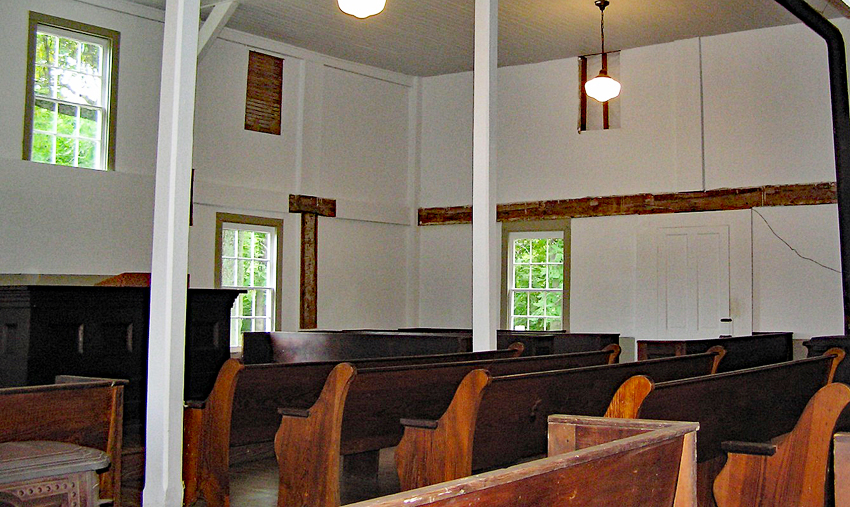
This simple meetinghouse traces its origins to 1775 when a Baptist congregation was organized at nearby Bull Run. Some of its members later wrote to Robert (“Councillor”) Carter requesting his permission to build a meetinghouse on land he owned near Frying Pan Spring. Carter agreed, and the present structure, erected by members of the congregation, was standing by 1791. The little-altered, wood-frame meetinghouse, is in the plain vernacular style favored by nonconformists.1
During the 18th and early 19th centuries, Baptists were among the few religious groups in Virginia that were openly accepting of African Americans. Frying Pan Meetinghouse is one of the state’s oldest surviving Baptist churches where a racially-integrated congregation was maintained from the very beginning. Frying Pan Meetinghouse and site are very significant to the history of the local black community. It was customary for eighteenth- and early nineteenth-century Baptist congregations to include blacks as members. From 1791 to 1867, free blacks as well as slaves became members of Frying Pan. They spoke of their religious experiences in congregational meetings, were baptized in Frying Pan Run, and were buried in the cemetery. By 1840 Frying Pan had twenty-nine black members and thirty-three white members.2 Frying Pan is therefore a rare, documented site related to the religious life of eighteenth- and nineteenth-century rural blacks as well as whites.
The sentiment of most white Baptist leaders in Virginia, at this time, did not favor separate churches for white and black members. They believed that the white churches should retain their black members and minister to them as long as possible, leaving to the freedmen the initiative to form separate churches and schools.3 After 1867, blacks in the Floris area organized their own Baptist congregation and in 1882 constructed Mount Pleasant Baptist Church on nearby Coppermine Road.
LIFE DURING THE CIVIL WAR
As with most communities and churches in Northern Virginia, life in Floris was continuously on edge due to the sporadic presence of both Union and Confederate troop movements and skirmishes. The Frying Pan Spring Meeting House witnessed much Civil War activity. Union and Confederate military records mention the location numerous times as a meeting place and a site of skirmishes. In 1861 and 1862, encampments of Confederate troops occupied the surrounding woods and fields. Confederate Cavalry General J.E.B. Stuart and partisan ranger Colonel John Singleton Mosby and their men often stopped here. Nearby, Mosby and his men received crucial information from Confederate sympathizers. The building was pressed into service as a field hospital for the sick and wounded by the Confederate Army. At least three Confederate veterans are buried in the cemetery.
A most notable event that would have changed the course of warfare in Northern Virginia happened in the Frying Pan area.
On February 11, Mosby’s command almost came to an end. He was warned by Laura Ratcliffe of his imminent capture. She was a local young lady who had come to Jeb Stuart’s notice when she and her sister attended wounded soldiers after First Manassas. According to several sources, while at the Ratcliffes’ home in late December 1862, on a farm just south of the village of Herndon in the Frying Pan area now called Floris, Stuart decided then and there that he was going to let Mosby have a small detachment of men to conduct independent guerrilla operations in Northern Virginia. A trap had been set for Mosby near Laura’s home. A young Union lieutenant could not resist boasting about it to her when he came by to purchase milk, saying, “I know you would give Mosby any information in your possession; but, as you have no horses and the mud is too deep for women folks to walk, you can’t tell him; so the next you hear of your ‘pet’ he will be either dead or our prisoner.” He underestimated her. Laura went out on foot across the fields to reach the home of her cousin George Coleman to ask him to warn Mosby. As luck would have it, her path crossed Mosby’s, and she was able to warn him herself, thus saving him from capture. He acknowledged his great debt to her in his memoirs, writing, “I observed two ladies walking rapidly toward me. One was Miss Laura Ratcliffe…But for meeting them, my life as a Partisan would have ended that day.”4
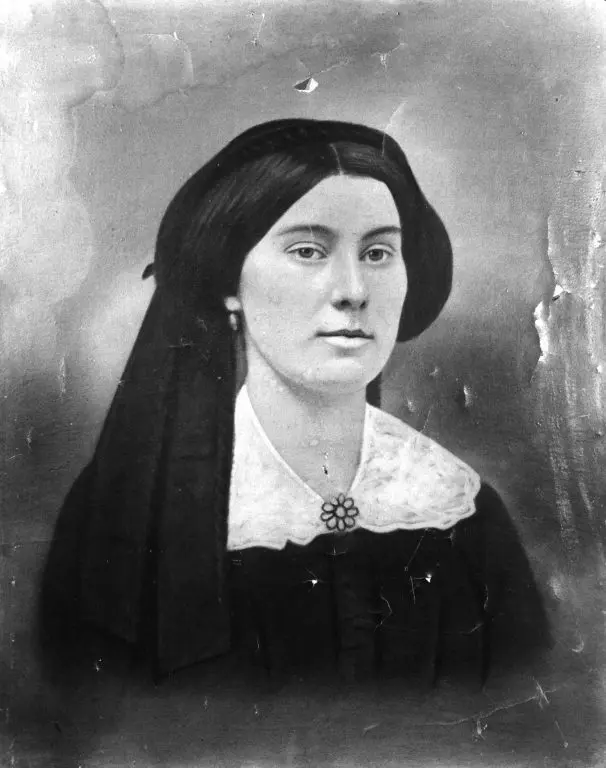
James Joseph Williamson was private who fought under Mosby from April, 1863, through until the end of the war. He records the following:
While scouting in Fairfax with John Underwood to ascertain the position and strength of the Federal forces, Mosby determined to attempt the surprise of outposts at Chantilly and Frying Pan — there being about 100 cavalry at each of these places.
Starting from Rector’s X Roads on the 23d of March, 1863, he proceeded down the turnpike until within about six miles of Chantilly, when he left the road, though still keeping the same direction. Coming out from a piece of woods within a mile of the Chantilly mansion, he moved towards the picket posted on a little run on the Little River Turnpike. Seeing the vedettes, some of our men left the ranks and dashed off in pursuit. They suddenly came upon a picket of 10 men which had been thrown out on the turnpike. One was killed and 5 or 6 surrendered and were taken back to Mosby.
The alarm being given, the reserves were called out, and Mosby finding the force quite a large one, fell back up the turnpike, the Federals following.
Halting at a place where there was a barricade of fallen trees, Mosby formed his men behind this obstruction and awaited their coming. On they came, but in the pursuit they were strung out along the road, and on receiving Mosby’s fire, wavered. A charge was now ordered; the Rangers rushed forward with a yell and the fight became a chase. The Federals were driven back and could not be rallied.
The chase was continued for about three miles, back to the place where it commenced. Here the Federals were reinforced by the reserve from Frying Pan Church, and Mosby was compelled to halt and then retreat. The enemy did not pursue very far, as night was coming on, and they were afraid of being led into a trap. Mosby sustained no loss. The Federals lost 5 killed, several were wounded, and 35 prisoners were taken.
Mosby announced his success to General Stuart in the following report:
Near Piedmont, Va., March 18, 1863. General: Yesterday I attacked a body of the enemy’s cavalry at Herndon Station, in Fairfax county, completely routing them. I brought off 25 prisoners, a Major Wells, 1 captain, 2 lieutenants and 21 men, all their arms, 26 horses and equipments. One severely wounded was left on the ground. The enemy pursued me in force but were checked by my rear guard, and gave up the pursuit. My loss was nothing. The enemy have moved their cavalry from Germantown back of Fairfax Court House on the Alexandria pike. In this affair my officers and men behaved splendidly.
JNO. S. MOSBY, Captain Commanding.5
Williamson mentions two other times that Mosby used the ground of Frying Pan Meetinghouse.
Friday, October 9th, 1863 — Mosby started from Rector’s X Roads with 40 men, and marching in the direction of Fairfax, bivouacked at night in the pines near Frying Pan. After lying concealed in the pine forest all day, fearing the enemy might become aware pf our presence, we moved off after nightfall to a point near Guilford, where we halted, fed our horses, and a little before day on Sunday morning, the 11th, rode out near the turnpike about 5 or 6 miles from Alexandria.6
Sunday, October 16.— Command met at Bloomfield. Companies C, E and F remained to operate along the railroad, while Mosby, with Companies A, B and D, went down in Fairfax to attack a large wagon train between Burke’s Station and Fairfax. We were too late, however, as the wagons had gone into camp, with a heavy infantry guard. We then moved towards Centreville, built fires in the pines and camped for the night. On the 17th we went to Annandale. Two men were sent to take pickets and draw out the cavalry. One of the pickets was taken and the other escaped to camp. The cavalry came out. We halted and remained in sight for some time, but as they made no demonstration, Companies A and B advanced towards them, when they hurried inside of their fortifications. Companies A and B then proceeded along the Ox Road in the direction of Frying Pan, and thence home. General Augur had been notified of Mosby’s presence in Fairfax, and while Augur’s cavalry were being sent to Fairfax in pursuit, Mosby was quietly marching back to Loudoun.7
Architectural Description
The following is the complete transcript of the United States Department of the Interior National Park Service, National Register of Historic Places Registration Form dated January 2, 1991, and prepared by Mary McCutchan Kell and Richard Sacchi, Administrator Cultural Resources, Fairfax County Park Authority. Entered into the National Register August 24, 1990
SUMMARY PARAGRAPH
The Frying Pan Meetinghouse is a small church located on a two-and-one-half- acre site at 2615 Centreville Road in western Fairfax County, near Floris, Virginia. Situated on a gently rising knoll above Centreville Road in what was originally a rural landscape, the meetinghouse now faces a modern sub- division. Built between 1783 and 1791, the Frying Pan Meetinghouse stands on its original site and thus maintains the integrity of its original relationship to its cemetery, spring, and baptismal pond on Frying Pan Run. There have been no major structural changes or alterations to the meeting- house since it was built with the exception of a nineteenth-century interior balcony and stairs. The materials and workmanship are of the plainest style. The building’s simplicity–its lack of decoration and ornament–and its preservation are fully in keeping with the spirit and teachings of the early Baptist congregation that built it.
ARCHITECHURAL DESCRIPTION
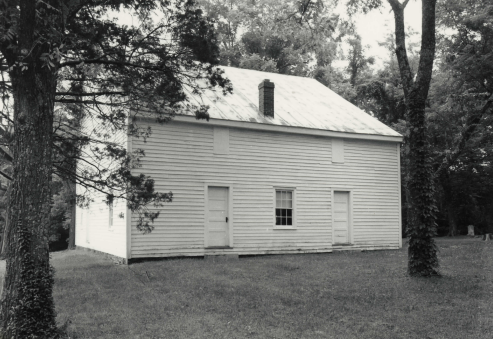
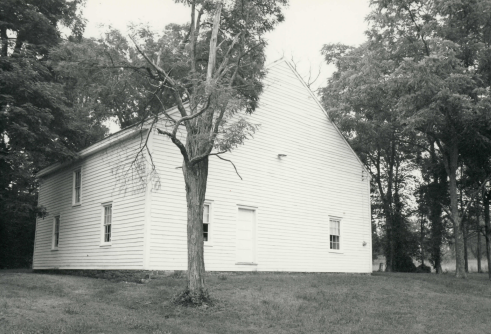
The Frying Pan Meetinghouse is a one-room, one-and-a-half story, post-and-beam structure, nearly square in plan. The interior is plain and its space unrelieved with the exception of a balcony across the back wall; it is reached by a narrow set of enclosed steps. At the front of the room in the center is a raised wooden platform on which stands a wooden pulpit. Arranged in three sections divided by two aisles are twenty-nine plain, wooden, highbacked benches. Four large hand-hewn posts with chamfered edges stand among the benches in the center section of the room. (See the accompanying interior sketch plan for the exact location and dimensions of these features.) The interior walls are plastered and painted white. Around the bottom half of the walls is white wooden wainscoting. The wooden ceiling is painted white. Heating is provided by two cast-iron, nineteenth century, woodburning stoves, one on either side of the room, connected to a pipe leading to a small brick chimney on the edge of the south roof. There is no evidence of an earlier fireplace.
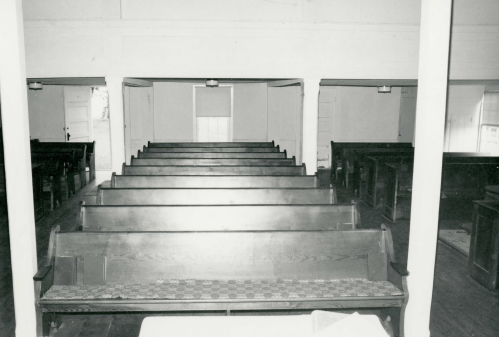
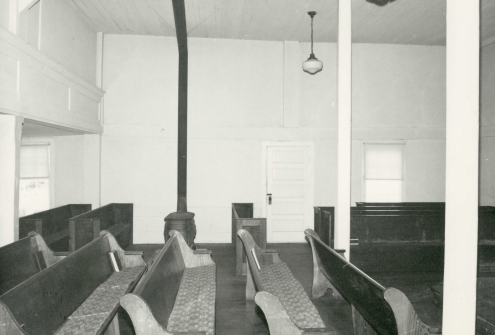
The exterior walls are covered with four-inch lapped pine clapboards painted white. The plain, wood-frame roof is covered with standing-seam sheet metal. The stone foundation has been repaired in this century and metal vents have been added. The eight, six-over-six, double-hung sash windows could date from the original eighteenth-century construction period, as the handmade glass and sash construction reflect the techniques of that time. The four doors and related hardware appear to be replacements, added as part of nineteenth-century renovations. (See accompanying sketch plan for the exact location of doors and windows.)

DESCRIPTION OF CONTRIBUTING RESOURCES
The cemetery that surrounds the meetinghouse contributes significantly to the site because it was the burying ground of most of the members of the church, including the black members. Church minutes that date back to 1791 document the deaths of members, while court depositions given by Henry J. O’Bannon and other trustees of the congregation in 1914 document the burial of blacks in the cemetery along with whites. In addition, the meetinghouse was used as a hospital following the Civil War skirmish at Dranesville in 1862, making it likely that Civil War dead are buried there too, although their graves are unmarked. The Frying Pan Spring and the stream on which the baptismal pond is located—the Frying Pan Run—also contribute to the site’s significance. Again, church records and court depositions document these features’ use by members and show, in particular, the importance to their religious practice of the Frying Pan Run. One original boundary marker remains in place at the southwest corner of the property. Its function and location have been documented by various plats that have been made of the property beginning with one by John Lewis in 1827 and including one made to be used in the 1914 case. Also, in O’Bannon’s deposition for the 1914 case, he described the boundaries of the property in some detail. (The case was a boundary dispute between trustees of the congregation and the McNair family—owners of a neighboring farm—who had erected a fence to keep their cows from wandering off, that blocked congregation members’ access to the Frying Pan Run and spring. The court decided in favor of the congregation and the McNairs had to take down the fence.)
DESCRIPTION OF NONCONTRIBUTING RESOURCES
Outside and inside there are lights, a meter box, and a fuse box, showing that the building was electrified (ca. 1920) and the system upgraded in more recent times. There is neither water nor plumbing in the building, there are two cinder block outhouses on the site; they are listed as noncontributing structures. No hard surface walkways exist on the site, nor is the driveway area improved.
The site is well endowed with a variety of mature deciduous trees, mostly oaks and locusts. Four magnificent oaks are located at the rear of the meetinghouse.
The Frying Pan Meetinghouse is significant to the local history of western Fairfax County, Virginia, primarily because the structure is the one remaining, largely unaltered, local example of eighteenth-century, vernacular, ecclesiastical architecture. Constructed between 1783 and 1791 by an unknown builder, the church possesses a remarkable degree of architectural integrity and serves as a tangible reminder of the important role the Floris community played in the history of western Fairfax County between 1791 and 1867 as a focal point for religious and community meetings for both local whites and blacks. After 1867, blacks in the area organized their own Baptist congregation and in 1882 constructed Mount Pleasant Baptist Church on nearby Coppermine Road. The property also includes a cemetery, spring, baptismal pond (on Frying Pan Run), and, at its southwest corner, an original stone boundary marker. Apart from its historic religious function the Frying Pan Meetinghouse and associated features, all of which remain in a nearly perfect state of preservation, form a rare surviving eighteenth-century rural environment in western Fairfax County.
HISTORICAL BACKGOUND
The Frying Pan Meetinghouse, which takes its name from nearby Frying Pan Run, is located at 2615 Centreville Road, near the intersection of Ox Road and Centreville Road in western Fairfax County, Virginia. Originally surrounded entirely by a rural landscape, the meetinghouse stands today on a two-and-one-half acre site surrounded entirely by suburban development.
Robert Carter, who was the land agent for the proprietor of the Northern Neck (Thomas Fairfax, sixth baron Fairfax of Cameron), encouraged the settlement of the area in the 1720s to secure workers for a copper mine that he wished to establish on Frying Pan Run. A patent was granted to Robin Carter in 1728. Although by the time of Robert Carter’s death in 1732, the mining scheme had failed, a few settlers remained in what was then a remote location in western Prince William County. When in 1742 Fairfax County was formed, it included this area.
A Baptist congregation was organized at nearby Bull Run by Elder Richard Major in 1775. Some members of this congregation wrote to Robert Carter requesting his permission to build a meetinghouse on two acres of land he owned near Frying Pan Spring, and to use some of his pine trees in its construction. Carter agreed on February 25, 1783.
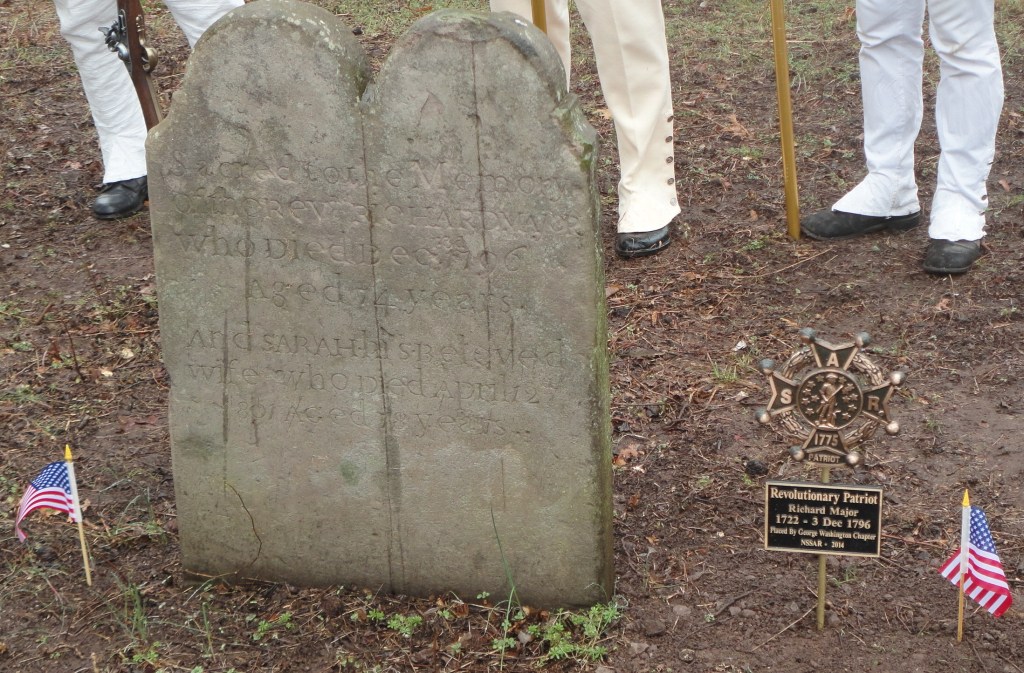
Elder Richard Major was the first pastor of Frying Pan, serving from 1791 to 1797. He was succeeded by Elder Jeremiah Moore, who served from 1797 to 1815. John Davis, an English traveler who passed through the community in 1801, wrote that the village consisted of “four log huts and a meetinghouse.8
The Frying Pan Meetinghouse is the only known church to have been built in Floris until the late nineteenth century. There is no other church in the Floris area that resembles it in style. It was built by members of its congregation with no help from an architect or professional builder.
Frying Pan Meetinghouse and site are very significant to the history of the local black community. It was customary for eighteenth- and early nineteenth-century Baptist congregations to include blacks as members. From 1791 to 1867, free blacks as well as slaves became members of Frying Pan. They spoke of their religious experiences in congregational meetings, were baptized in Frying Pan Run, and were buried in the cemetery. By 1840 Frying Pan had twenty-nine black members and thirty-three white members.9 Frying Pan is therefore a rare, documented site related to the religious life of eighteenth- and nineteenth-century rural blacks as well as whites.
In 1984, Arthur L. Carter of Manassas, Virginia, the last surviving member of the congregation, deeded the church and property to the Fairfax County Park Authority. The building is not now open to the public. If and when funds become available to bring the structure up to county code for public buildings and to provide for appropriate interpretation, the meetinghouse may be opened as a museum.
Today the Frying Pan Meetinghouse and its site are also important because they form an intact eighteenth- and nineteenth-century cultural landscape. The meetinghouse stands on its original foundation, surrounded by its graveyard, near the Frying Pan Spring and a short distance from the Frying Pan Run, where many of its members were baptized. The structure and site can continue to yield important information about eighteenth- and nineteenth century community and religious life if that relationship remains undisturbed. The entire site, not just the building, was used in early, rural Baptist religious practice; the meetinghouse for worship and association meetings; the graveyard for burials; the spring for fresh water for the members and the horses that carried them; the stream for baptism; and the yard for tethering horses. The Frying Pan Meetinghouse and site were used this way from the late eighteenth century to at least the late nineteenth century.
Major Bibliographical References
- Davis, John. Travels of Four Years and a Half in the United States of Americ During 1798, 1799, 1800, 1801 and 1802. New York: Henry Holt and Company, 19
- Frying Pan Baptist Church vs McNair. Chancery File No. 288. Fairfax County Archives. Fairfax County Court House, Fairfax, Virginia.
- Journal Messenger, Manassas, VA. “Manassas Man Deeds Historic Church” September 9, 1984. p. A7
- MICR VREF 929.3755 FRYI. Frying Pan Baptist Church. Loudon County, Virginia, Minutes 1791-1875. Fairfax County Central Library, Virginia Room Collection. Fairfax, Virginia.
- Pentecost, Julian. “Virginia Baptist and Religious Freedom” Religious Herald 1986. pp. 4-7
- Semple, Robert B. A History of the Rise and Progress of the Baptists in Virginia. Richmond, VA: Pitt & Dickinson Publishers, 1984
- Western Fairfax County Survey Report, Part II. Fairfax County, VA; Heritage Resources Branch, 1984
- DHR | Virginia Department of Historic Resources 029-0015 Frying Pan Meetinghouse. ↩︎
- Frying Pan Church Minutes. see MICR VREF 929. FRYI. Fairfax County Library. ↩︎
- Virginia Baptists and the Negro, 1865-1902 Author: W. Harrison Daniel Source: The Virginia Magazine of History and Biography , Jul., 1968, Vol. 76, No. 3 (Jul., 1968), pp. 340-363 Published by: Virginia Historical Society ↩︎
- Mosby’s Raids in Civil War Northern Virginia (Civil War Sesquicentennial Series) pp 38-39 by William S Connery ↩︎
- Williamson, James Joseph. Mosby’s Rangers: A Record of The Operations of The Forty-Third Battalion Virginia Cavalry, From Its Organization to the Surrender (pp. 34-35). Lector House. ↩︎
- Williamson, James Joseph. Mosby’s Rangers: A Record of The Operations of The Forty-Third Battalion Virginia Cavalry, From Its Organization to The Surrender (p 56). Lector House. ↩︎
- Williamson, James Joseph. Mosby’s Rangers: A Record Of The Operations Of The Forty-Third Battalion Virginia Cavalry, From Its Organization To The Surrender (p 59). Lector House. ↩︎
- “John Davis, Travels of Four Years and a Half in the United States of America During 1798, 1799, 1800, 1801 and 1802”. New York; Henry Holt and Company, 1909. p. 374-75. ↩︎
- Frying Pan Church Minutes. MICR VREF 929. FRYI. Fairfax County Library. ↩︎
 Mairi & Dave's Gallivant Through Virginia and About