In one of our most fascinating gallivants into the Virginia countryside we saw several very historic churches. Among those that we saw were churches that were shaped by the ravages of the Civil War, internal family strife, and one that is renowned for it’s Gothic Revival paintings and architectural style
All Saints Chapel, Rapidan, VA, with Cemetery
23130 Cedar Mountain Dr Rapidan, VA 22733
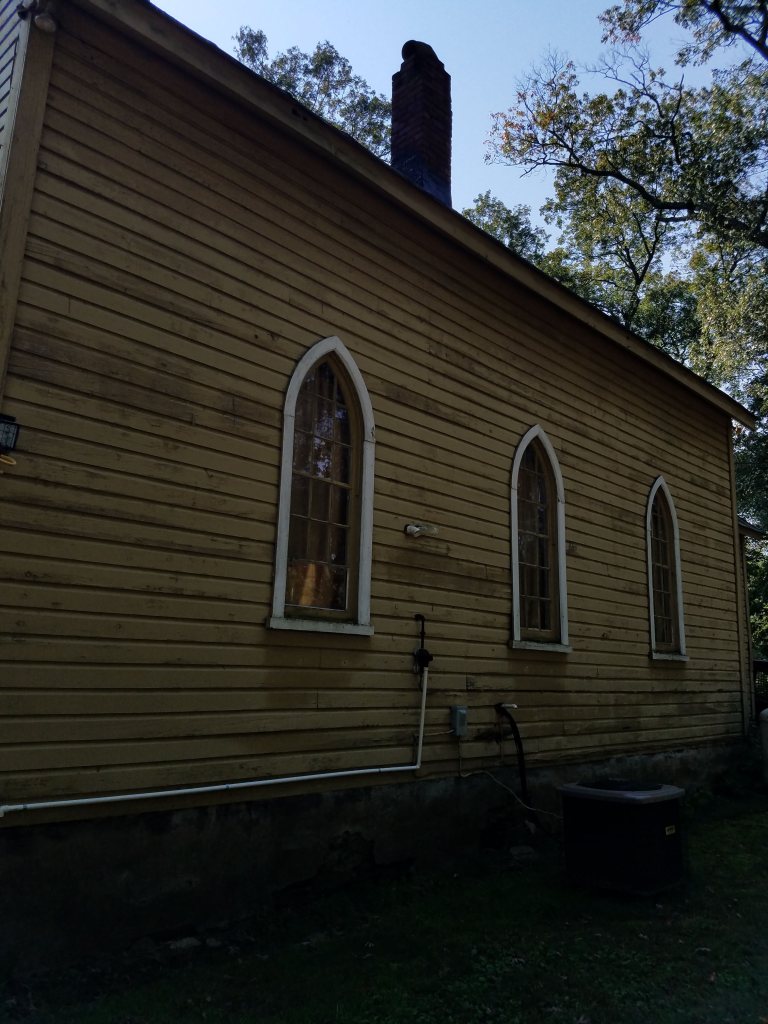
This church, originally known as “Old Calvary” was consecrated June 20, 1860. “Old Calvary” was to be destroyed by General Grant’s Union troops in March of 1864. All Saint’s Chapel was resurrected on the site with it’s first service January 8, 1893 (See article below). All Saints Chapel, now houses Divine Life Ministries. The small building and its cemetery are located on Cedar Mountain Drive in Rapidan, Culpeper County, Virginia. We had the pleasure of talking to the Church’s Pastor James Greg Mack.

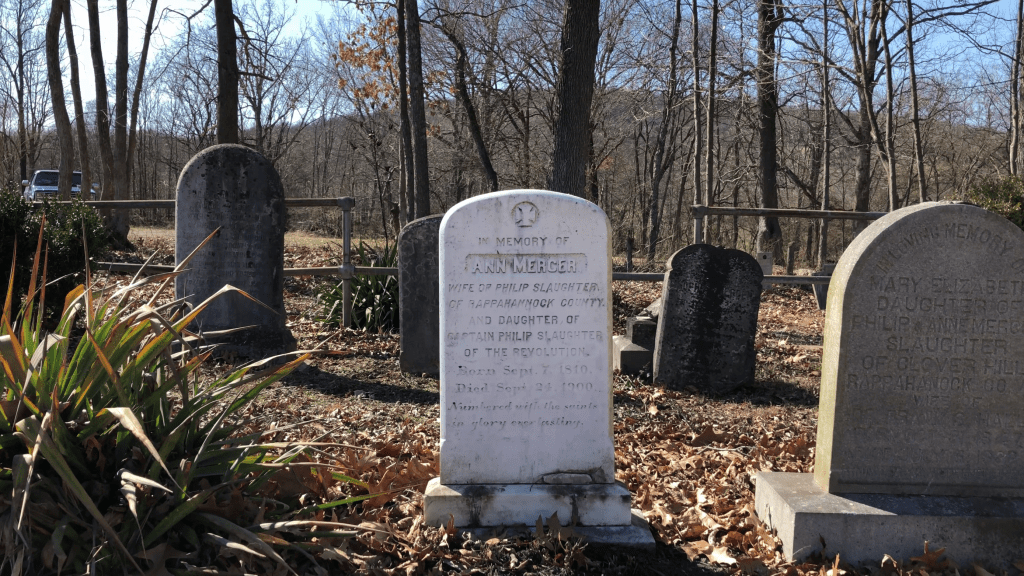
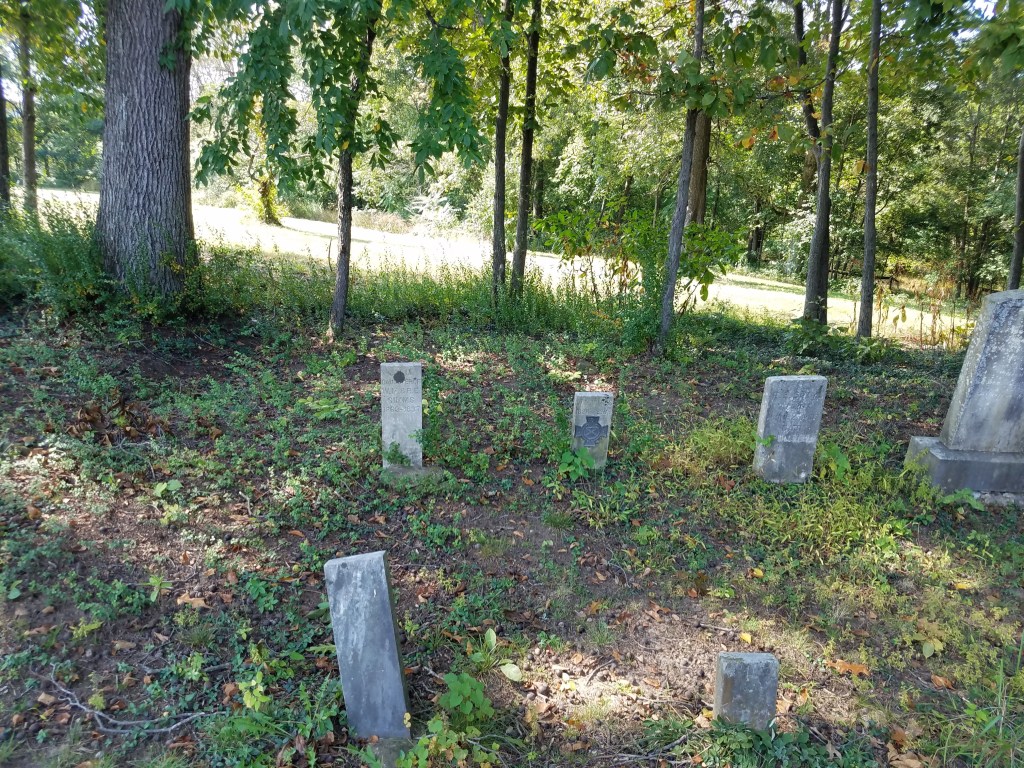
In this small cemetery, which obviously dated from the time of All Saints Chapel or before, is marked by the grave of Ann Mercer Slaughter (1810-1900). Ann Slaughter was the daughter of Philip Slaughter, one of the Culpeper Minutemen of 1775 who fought at Great Bridge. Her father later served in the 11th and 7th Virginia Regiments of the Continental Line, and was at Valley Forge, Brandywine, and Germantown. He was promoted to captain for bravery.
Ann Slaughter, Philip’s daughter, married her cousin, also Philip Slaughter. Her brother Philip Slaughter married Anna Sophia Semmes Slaughter (1815-1896). This Philip Slaughter (1808-1890) founded this Church. In 1856 he erected a church on his own land in Culpeper County, and officiated there without remuneration until the Federal Army destroyed it in 1864. He then preached in his own house, in camps and hospitals. See article below for further details.
The following is a newspaper article that we came across that best narrates the history of “Old Calvary” and All Saints Chapel.
A WAR REMINISCENCE. Consecration of a Memorial Chapel on a Battlefield – News article in the Sonoma Democrat July 17, 1894
We have received the following interesting letter from Culpeper county, Virginia, with the request for its publication. The chapel referred to as built partly by the aid of Federal soldiers stood upon the field of battle between the forces of Major General Pope and Stonewall Jackson, called in some histories the Battle of Cedar Mountain and in others the battle of Slaughter Mountain. The chapel stood at the foot of the hill upon which Jackson planted his batteries, and the struggle was around the site of the church. The land lies along the slope of the Blue Ridge and was directly on the road from Richmond to Washington, close to the Rapidan and Rappahannock rivers.
June 13th, 1894, was a red-letter day in the history of the church people and community inhabiting the eastern slope and valley of Slaughter’s mountain in Culpeper county, Virginia. The occasion was the consecration of another of those many “temples to the living God” which during the last twenty-five years have risen Phoenix-like from the wreck of war in the Piedmont section of Virginia, north of Rapidan river.
The interest of Virginia churchmen generally is greatly heightened by the fact that this chapel is intimately associated with the late Rev. Dr. Philip Slaughter, to whom this is a memorial.
Located at the foot of Slaughter’s mountain, about half a mile, as the crow flies, from Dr. Slaughter’s residence upon the slope, the church and home unite to remind kindred, brethren and friends of that eloquent preacher and beloved man.
All Saints’ Memorial Chapel stands upon the site of “Old Calvary, Slaughter’s old church,” as it is called in the diocesan journal. Old Calvary, built by special effort and under the rectorship of Dr. Slaughter, was consecrated June 20, 1860. In March, ’64, it was destroyed by Grant’s army and the material hauled away and built into a hospital for Federal soldiers. When the soldiers were tearing down the church a handsome stained-glass window was conspicuous amid the debris, and some little girls, sisters of the present church warden, asked permission to take it away, which was given, and the window preserved. After the war Dr. Slaughter placed this window in a chancel attached to the parlor of his house where he held services for the benefit of his neighbors. The window was afterward transferred to Calvary at Mitchell’s Station, where it now is. This second Calvary was built by generosity of Mr. John T. Parish of New York, formerly of Culpeper, Virginia. Old Calvary, though on the line of march, under the sound of cannon, from the beginning of the war, was not destroyed until March, ’64, and it is interesting to note in this connection that the Federal general, Duryea, gave written protection to it so long as he was in command of the forces in the neighborhood, as a mark of reverence, said he, to the cross which crowned its belfry.
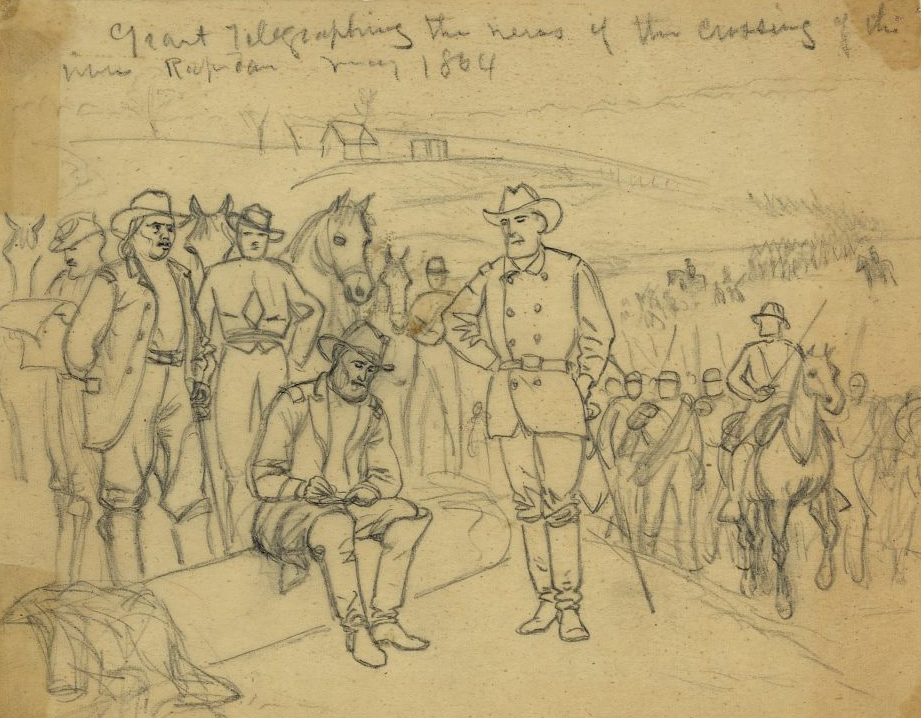
The revival of the church on its present site was a hope that for years lay deep in the affections of the projectors and builders of “All Saints’ Memorial Chapel.” The inspiration and nourishment of such hope may be found in the beautiful and touching words of Dr. Slaughter himself. In his report to the convention of 1865 Dr. Slaughter says: Whether this church shall rise again. God only knows. If a sparrow shall fall to the ground falls to the ground without his notice, much less can a church perish by violence. If it rise not, then let the wailing winds still play its requiem and the plaintive dove still chant its funeral dirge!” It has risen! On Jan. 8, ’93, the first service was held in the new building—bare walls and rude benches but representing three months’ labor by willing hearts and hands.
Today the chapel stands complete—a beautiful semi-Gothic structure, seating from 100 to 150 people: pews, furniture and painting all in admirable taste and churchly. The actual money cost, including furniture, was only $1000. An interesting fact is that a part of this $1000 was contributed unsolicited by Federal soldiers who had helped to destroy the old church. The people furnished snob timber as was suitable, boarded the bands and did the hauling. In the churchyard, eighty feet from the chapel, stands a modest building intended for parish work. In it a school is carried on, -begun a year ago with thirty scholars, where sewing and type-writing are taught and religious instruction given.
On Wednesday, June 13, all these hopes and labors were crowned when the Rev. John B. Newton, assistant bishop of the diocese, consecrated this building to the service of Almighty God. This will stand out as the first consecration service conducted by Bishop Newton, himself so lately consecrated. He was assisted in the services by Rev. G. Mosely Murray, rector of the parish, and Revs. Charles Mayo, S. P. Watters, John Hansbrough and O. W. Nelson. The consecration sermon was preached by Rev. Charles Mayo, who moved the hearts and minds of the hearers, as was abundantly testified to by many enthusiastic remarks heard by the writer after the services. The morning services were followed by an abundant and delightful lunch served in the churchyard – carrying one back to those old Virginia associations in which Dr. Slaughter figured so conspicuously as evangelist and revivalist strengthening the conviction of us of older times that it is a blessed thing to feast together in the name of the Lord, that our religions life is deepest and truest when it includes our social life. With 4 o’clock p. m. came the evening service, at which the bishop preached and administered the rites of confirmation. The services were deeply interesting throughout. It was delightful and hope-inspiring to see how our new bishop captured the hearts of all the people. His earnest band, searching words and genial, unaffected manners convinced everyone that he really enjoyed being with the people, made glad the hearts of his friends and attended the wisdom of that unanimous voice of the laity which confirmed him in the Episcopate. And the congregation; the people themselves! Earnest, devout worshippers crowded every pew, and chairs and benches in the aisles were filled. Songs of praise ascended from every spot of standing room within the building, while without wagons and carriages packed with eager faces were drawn up at every window on both sides of the church, and still a crowd of men about the entrance told how these farmers had left their ripe grain in the field and come up to the house of the Lord to testify their love and devotion.
Genealogical and Historical Notes on Culpeper County, Virginia
Embracing a Revised and Enlarged Edition of
DR. PHILIP SLAUGHTER’S HISTORY OF ST. MARK’S PARISH
The following selection is quoted remarks by the Rev. John Cole on the destructive effect of the Civil War on the churches of Culpeper County including Philip Slaughter’s “Old Calvary”.
Mr. Cole in his report of 1865-66, tells the tale with bleeding heart and bated breath. He says: ” Since my last report of 1861 cruel war has raged. Pen cannot write or words utter the trials of mind and heart, and the privations endured. All the Episcopal churches in this county, and every other place of worship within the lines of the Federal army (except the Baptist and Episcopal churches at the Courthouse), were utterly destroy ed by it during the winter of 1883-64. The whole country is a widespread desolation. The people, peeled and poor, are struggling for a living. During the occupation by the Federal army we were not permitted to use our church. We worshipped God, like the primitive Christians, in private houses, and never did the services of the Church seem sweeter or more comforting. I visited the sick and wounded and buried the dead of both armies alike— the number of funerals being 490. It is a record for the great day, and not for the Convention. There were twenty churches of denominations destroyed within a comparatively small area. Among these in this parish were St. Paul’s and St. James, and Calvary Church, under the care of Rev. P. Slaughter, at the foot of Slaughter’s (Cedar) Mountain. The last-named church was built by Mr. Slaughter on his own place when by ill-health he was constrained to retire to the country. This church was consecrated by Bishop Johns in June, 1860, and Mr. S. officiated for the benefit of his neighbors and servants, without fee or reward, other than that arising from the consciousness of trying to do some good, under the burden of many infirmities. That only relic of this church is a beautiful, stained window, which was spared at the intercession of a young lady, who kept it under her bed till the war was over. The window now lights a chancel in Mr. Slaughter’s dwelling, which also contains a desk, the only relic of another of his old churches which was burned. The chancel, with its relics has in it the seeds of an unwritten poem, whose melody is only heard in the heart.”
Mr. Slaughter in his report to the Convention in 1865, says – “Since the destruction of my church and the desecration of my home by Federal soldiers, I have spent my time in the army and in the hospitals, and in editing the ‘Army and Navy Messenger,’ a religious journal for our soldiers and sailors.” The despoiled church at Culpeper has been restored by the aid of friends; St. Paul’s has been rebuilt by the kindness of Mr. Farish; St. James has been risen from the ashes at the bidding of Miss Wheatley and others; but a few stones and a little grove of evergreens of second growth are all that mark the spot where once stood a consecrated fane (a temple or shrine) at the foot of Slaughter’s Mountain. The wailing winds play requiems upon the evergreen harps of pine, and the birds singing sweetly among the branches, with responsive echoes, are now the only choir which chants anthems, where once young men and maidens, old men, and children, praised the name of the Lord. It is proper to say that Mr. Slaughter has declined contributions for rebuilding the church, in favor of other churches where the field promised a better harvest.
Whether this church shall rise again God only knows. His will be done! If a sparrow cannot fall to the ground without his notice, much less can a church perish by violence. If it rise not, then let the wailing winds still play its requiem, and the plaintive dive chant its funeral dirge.
Wesleyan United Methodist Church
711 Bristersburg Road, Calverton, VA 20138
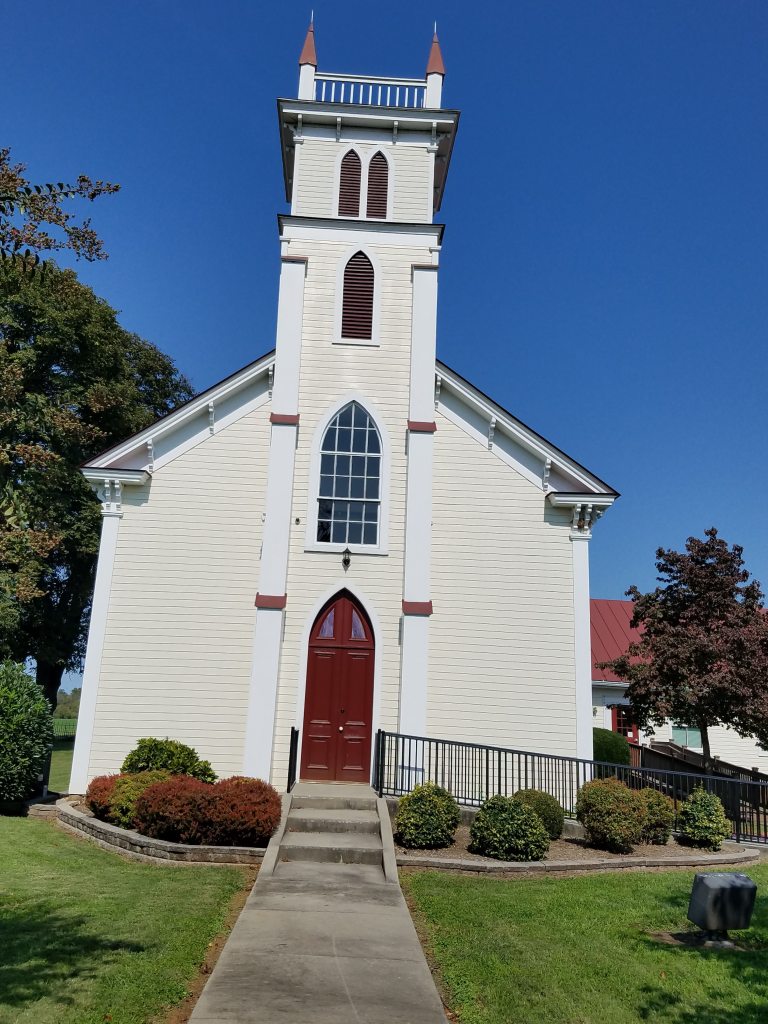
Bethel Baptist Church with cemetery
12058 Mitchell Rd, Mitchells, Culpeper County, Virginia, 22729

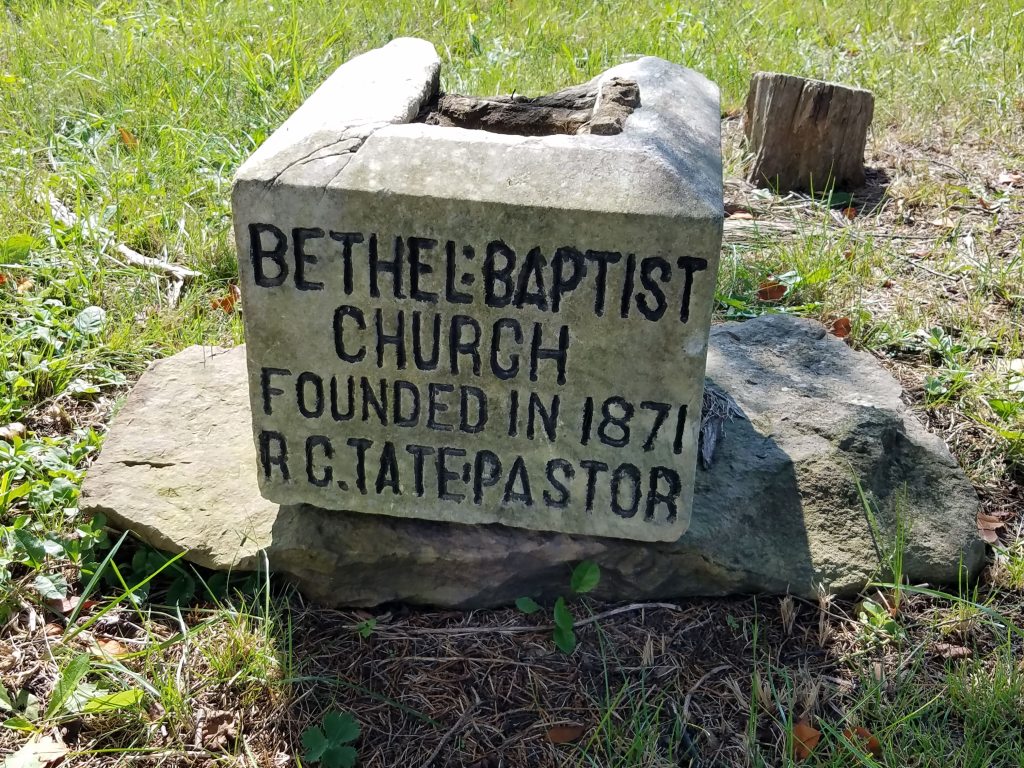
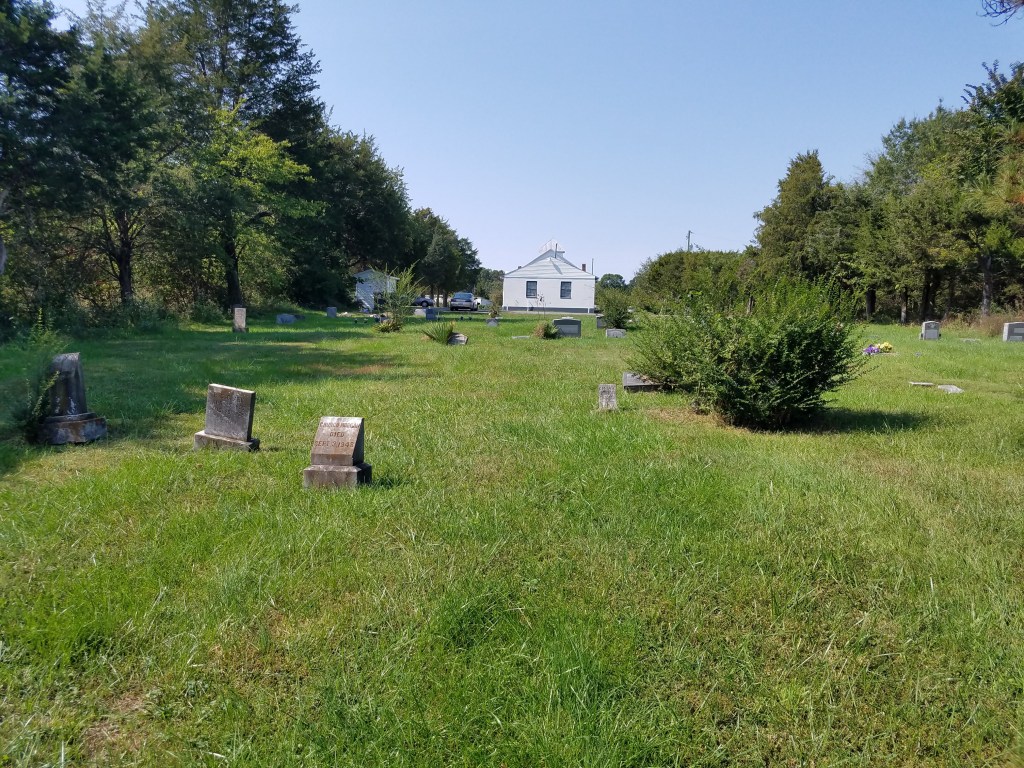
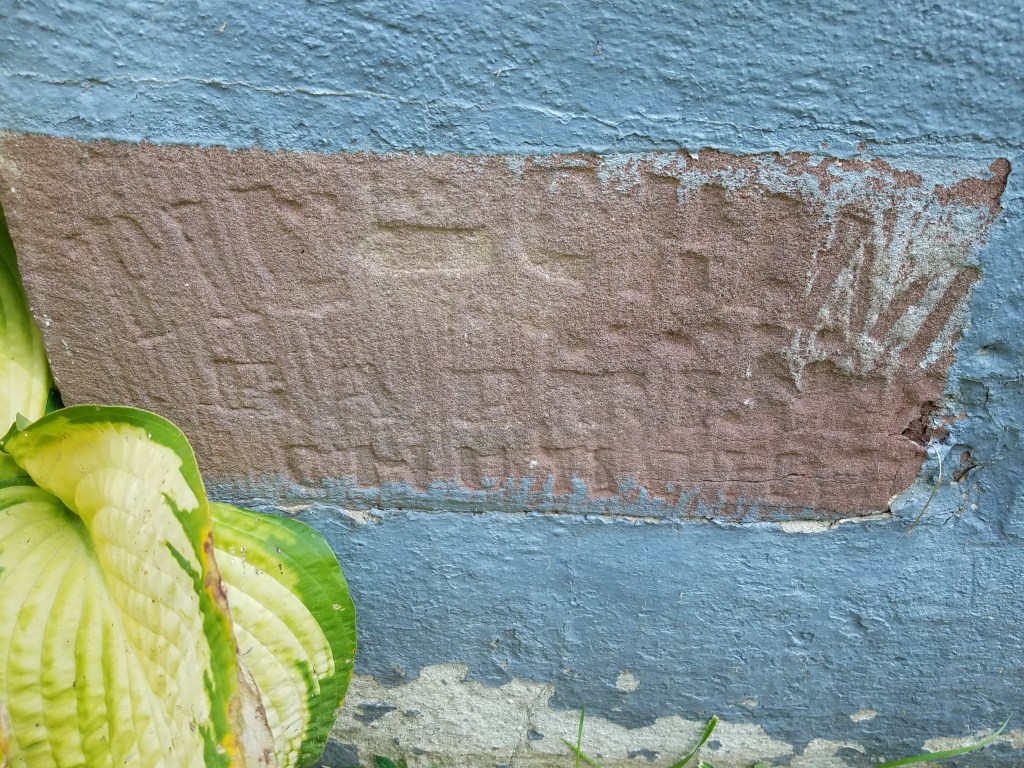
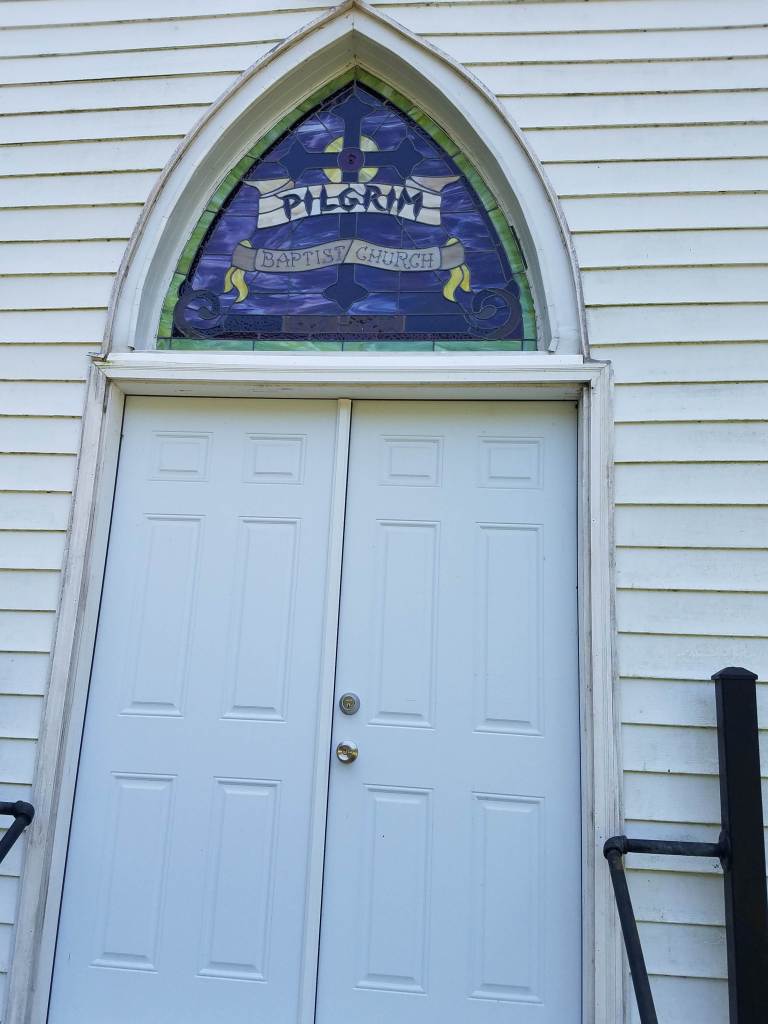
Pilgrims Baptist Church with Cemetery
23390 Slaughters Mill Road, Mitchells, VA 22729
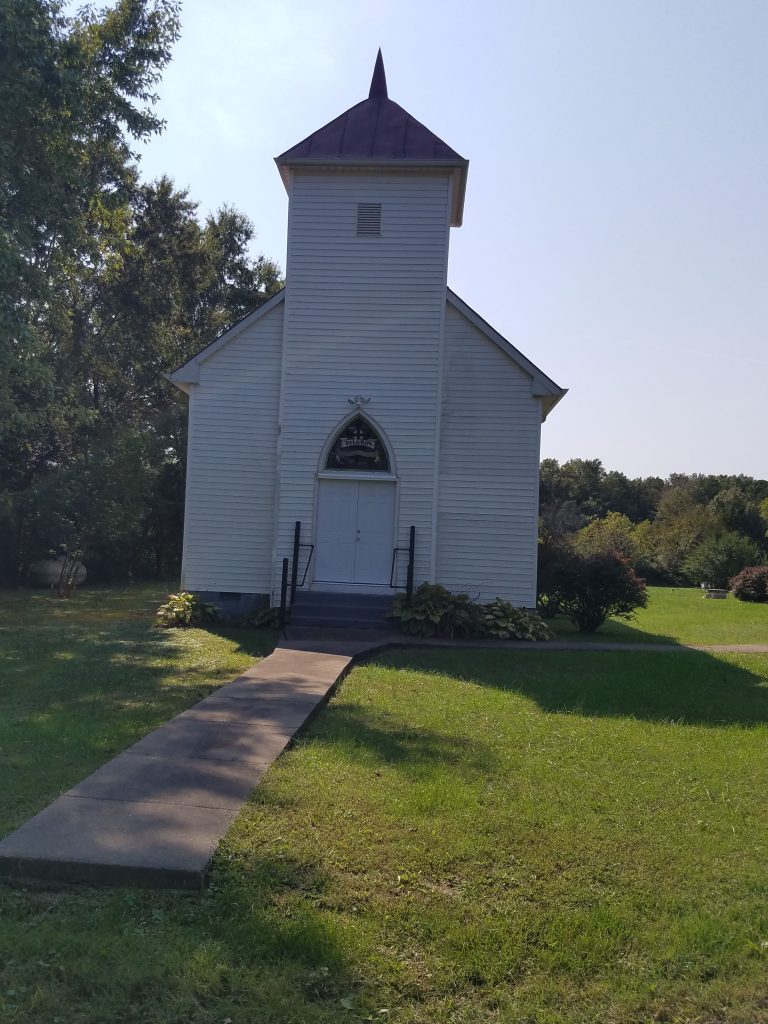
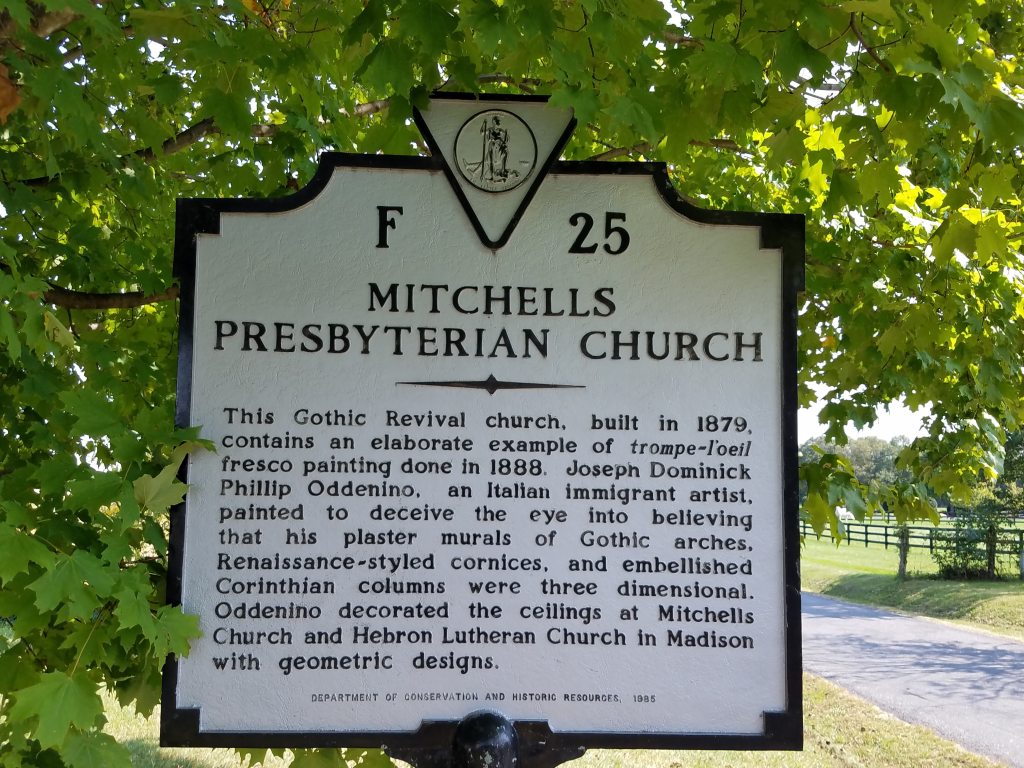
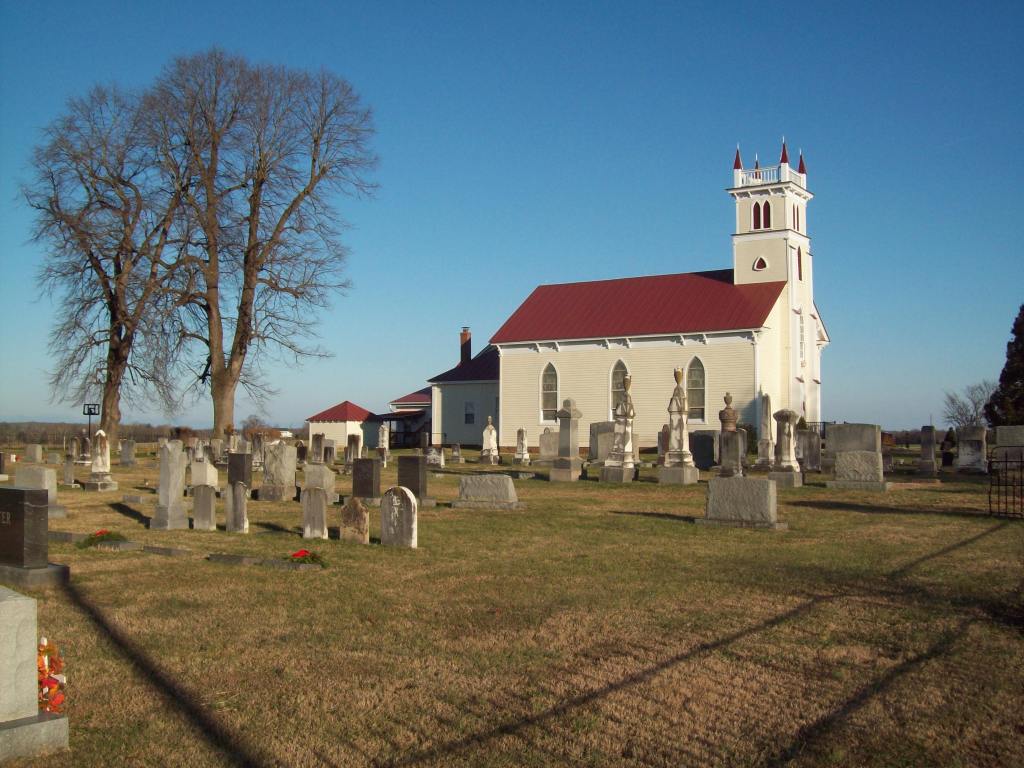
Mitchell’s Presbyterian Church and Cemetery
23425 Rapidan Rd, Mitchells, VA 22729
From the Home Page of Mitchell’s Presbyterian Church
Mitchells Presbyterian Church began around 1844 in Orange County and was known as the Rapid Ann Presbyterian Chapel. On October 18, 1867, the congregation was granted permission by the Presbytery of Rappahannock to organize as Rapidan Church. Due to the rising of the Rapidan River, the congregation from Culpeper County decided to relocate to “this side of the river.” The present sanctuary was dedicated in 1879 and the name was changed to Mitchells Presbyterian Church in 1888.
In the years between 1892-1899, Joseph Oddenino was commissioned by the church to paint the interior walls. He used the technique of trompe-l’oeil (from the French meaning “deceive the eye”).The church is a registered landmark on both the Virginia Historic Landmarks Register and the National Register of Historic Places.
After the death of Dr. Thomas W. Hooper in 1954, the church was served by students from Union Theological Seminary in Richmond.
In 1960, we were yoked with Waddell Memorial Presbyterian Church in Rapidan, sharing a pastor. We built our first addition in 1965, giving us a pastor’s study, Sunday School rooms, kitchen, fellowship hall, and running water. We continued as a yoked field until 1973 when the two churches voted to go their separate ways.
From 1981-1983, we completely restored the sanctuary with grants and contributions from many members and friends.
In 1999, we began another wing that included a larger kitchen, additional Sunday School rooms, larger fellowship hall, and new bathrooms. This addition was dedicated in October 2000.
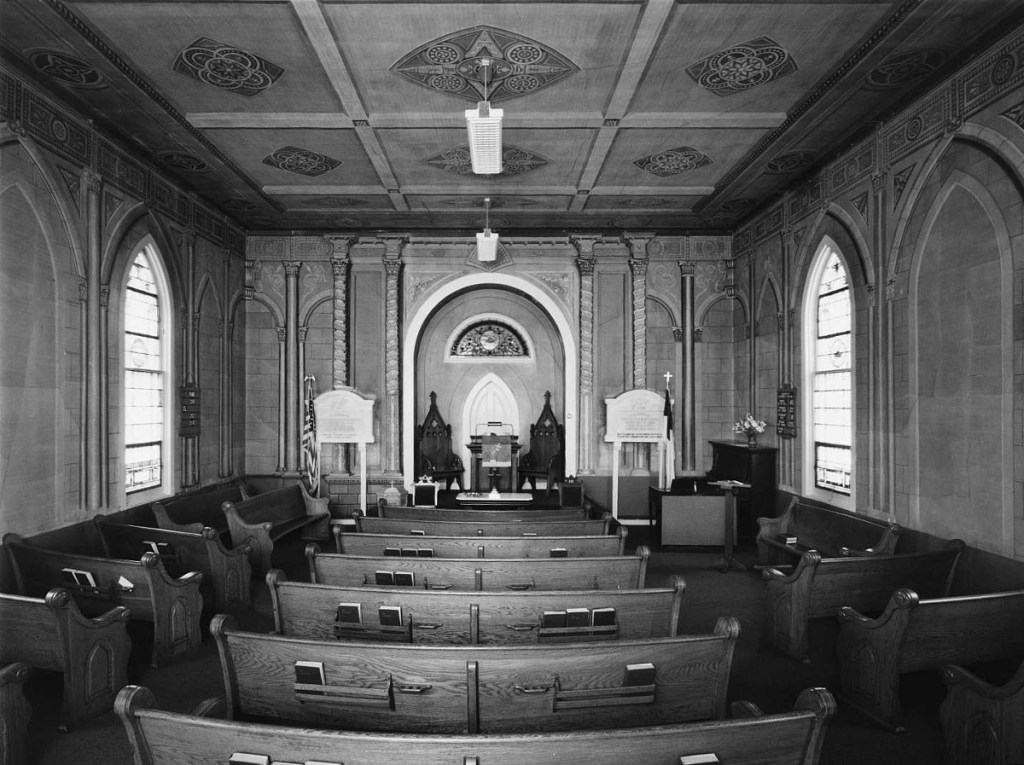
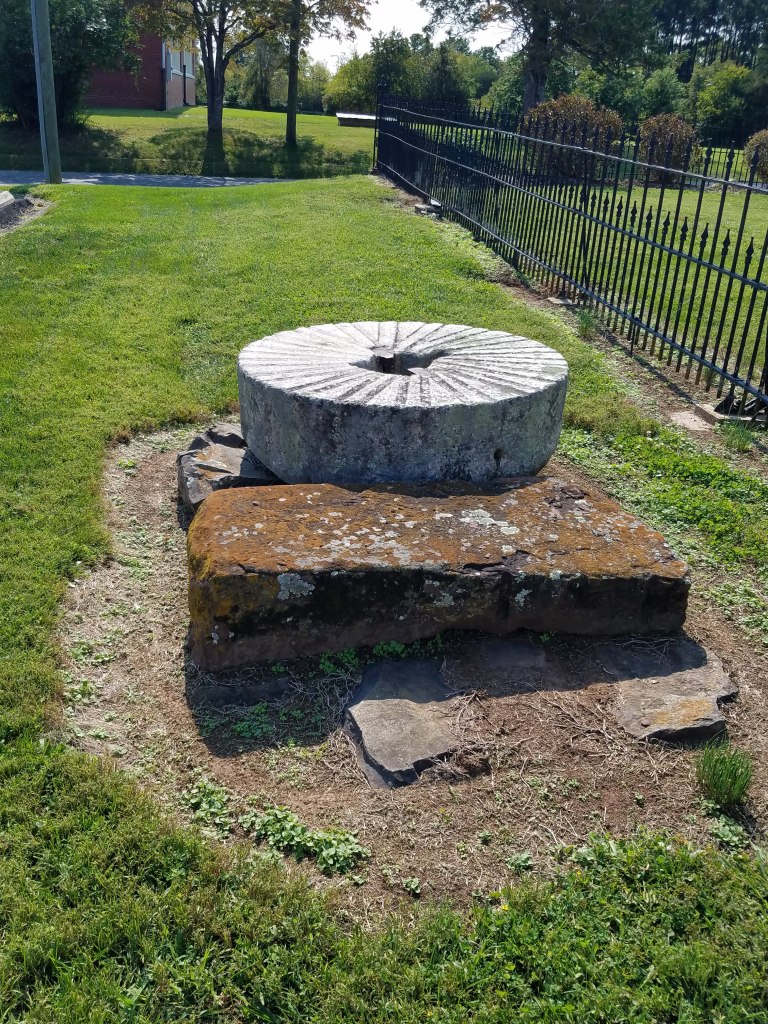
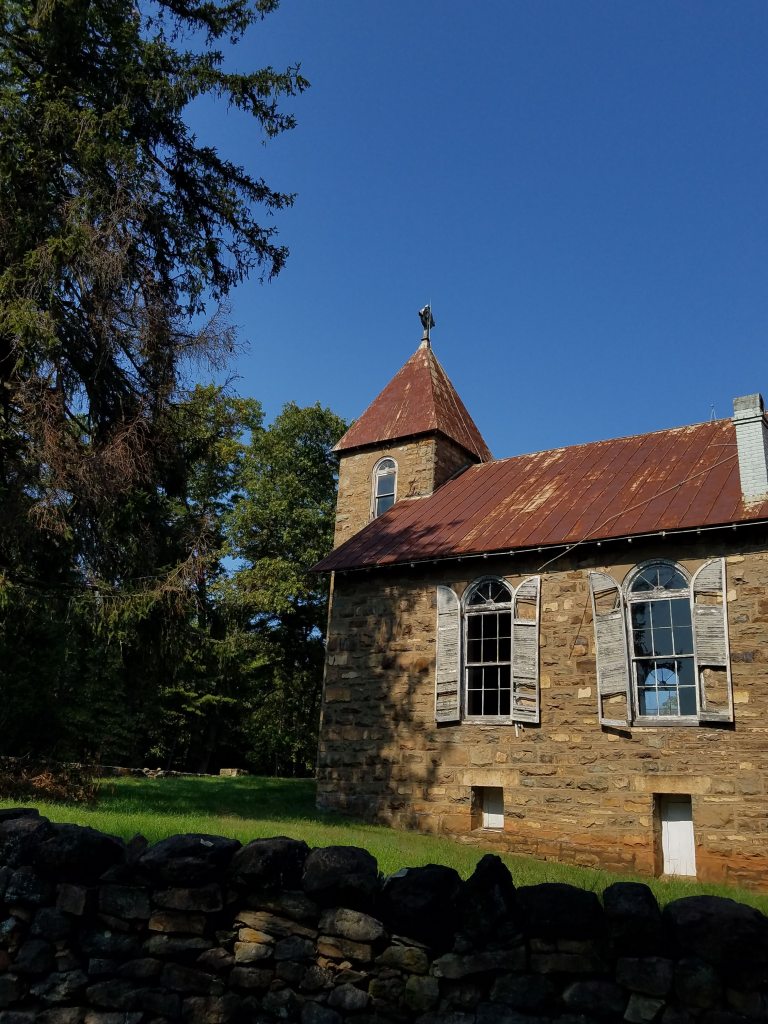
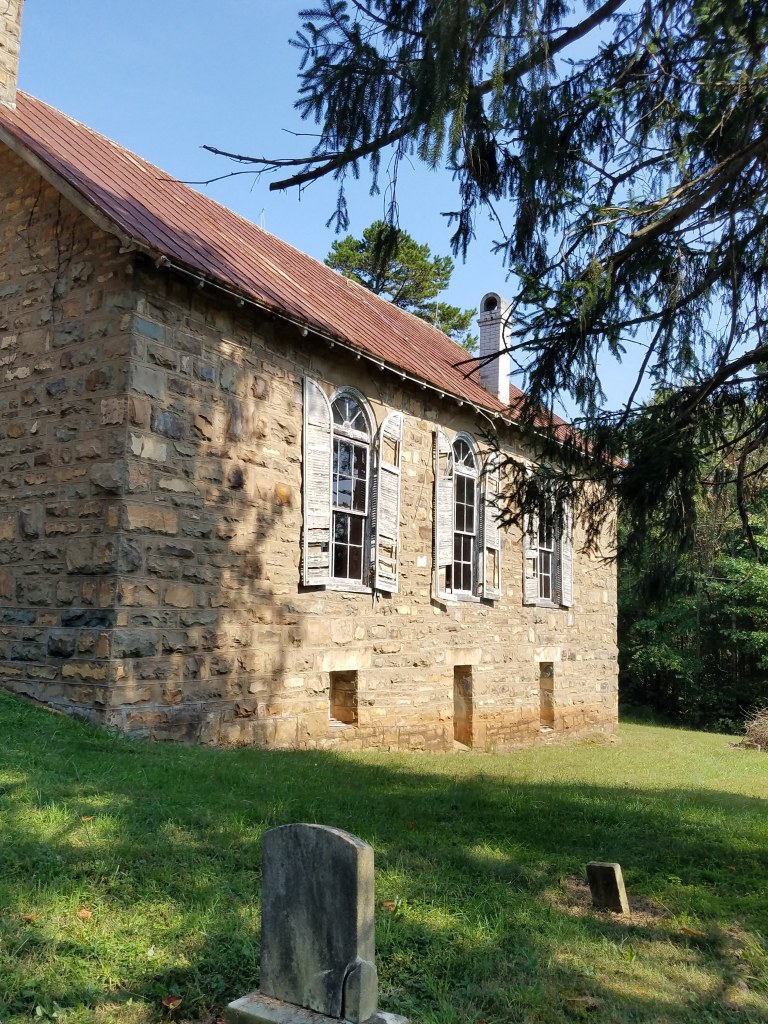
“The Winston Family Chapel” with Cemetery now Abandoned
Winston, VA on US Rt. 522 and Del Rios Way
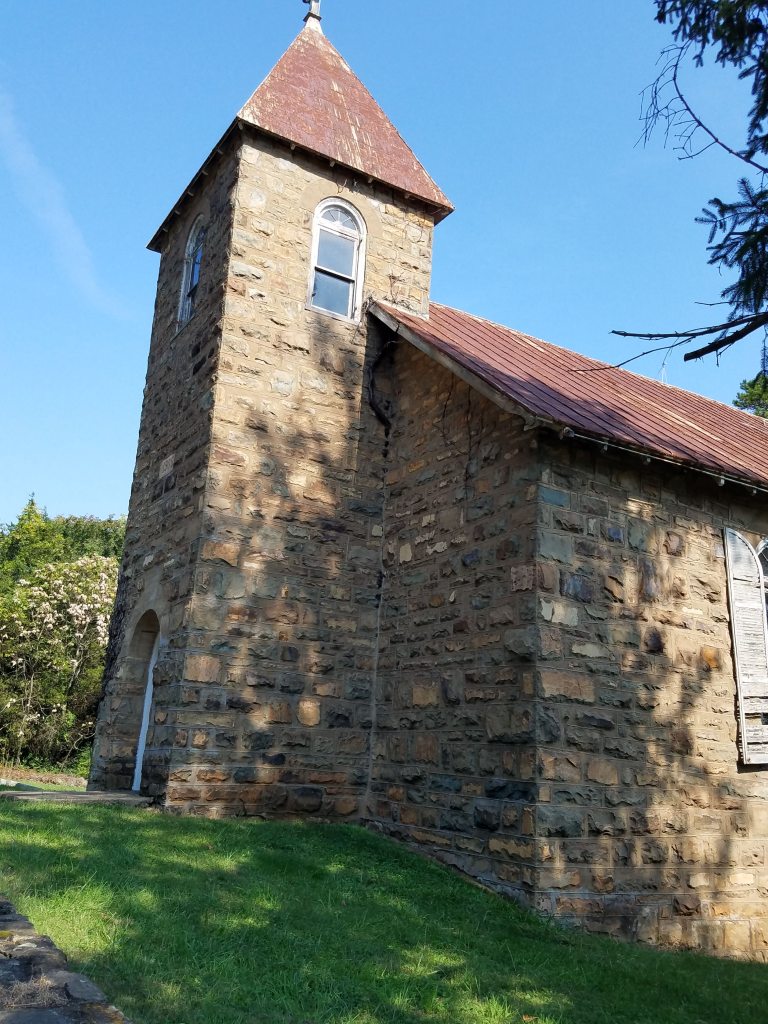
The brownstone chapel, built around 1908, has been unused for many years and is falling into disrepair. The chapel was constructed around 1908 by the patriarch of the Winston family, who apparently was quite wealthy. On his passing his will allocated the ownership, care, and maintenance of the chapel to the Winston family decedents. Apparently, however, the Winstons were at odds with another local family, the Somervilles. The Somervilles constructed their own church in Mitchells, also in Culpeper County (and apparently still standing today).
As time went on, the families remained at odds, with the exception of two young lovers who, as you may have guessed, ended up getting married, linking the two families. As time passed, the Winston family members have all passed away, and through inheritance, all assets (including the chapel) ended up in the hands of the Somerville family. And that is where is stands, as is, today.
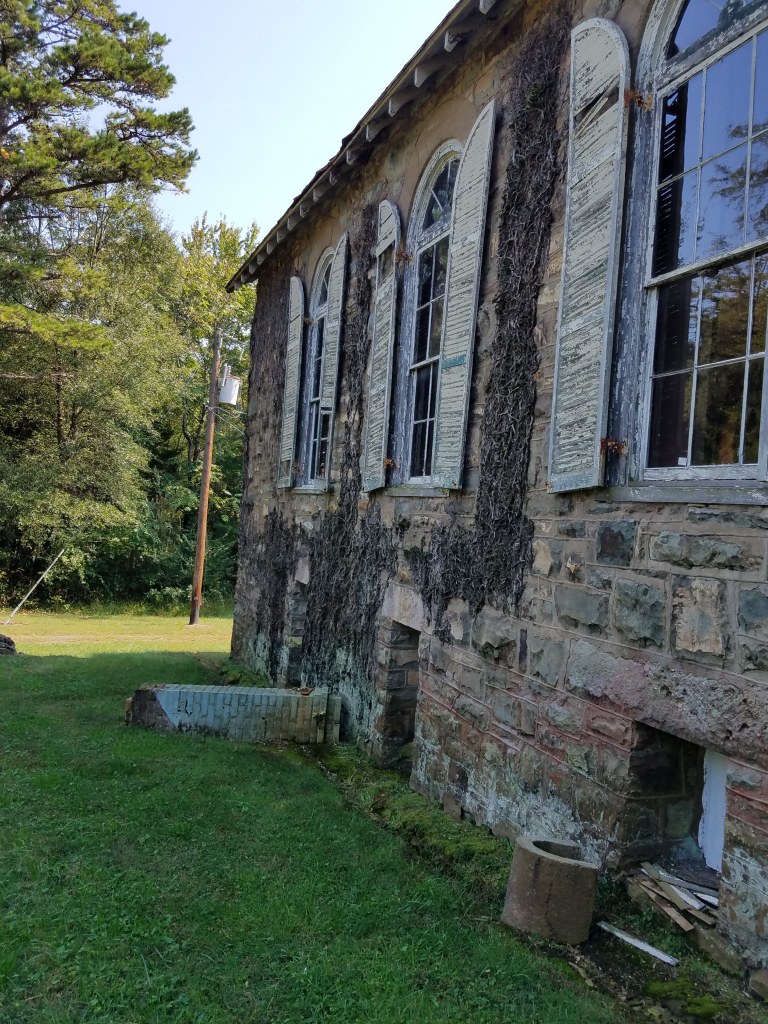
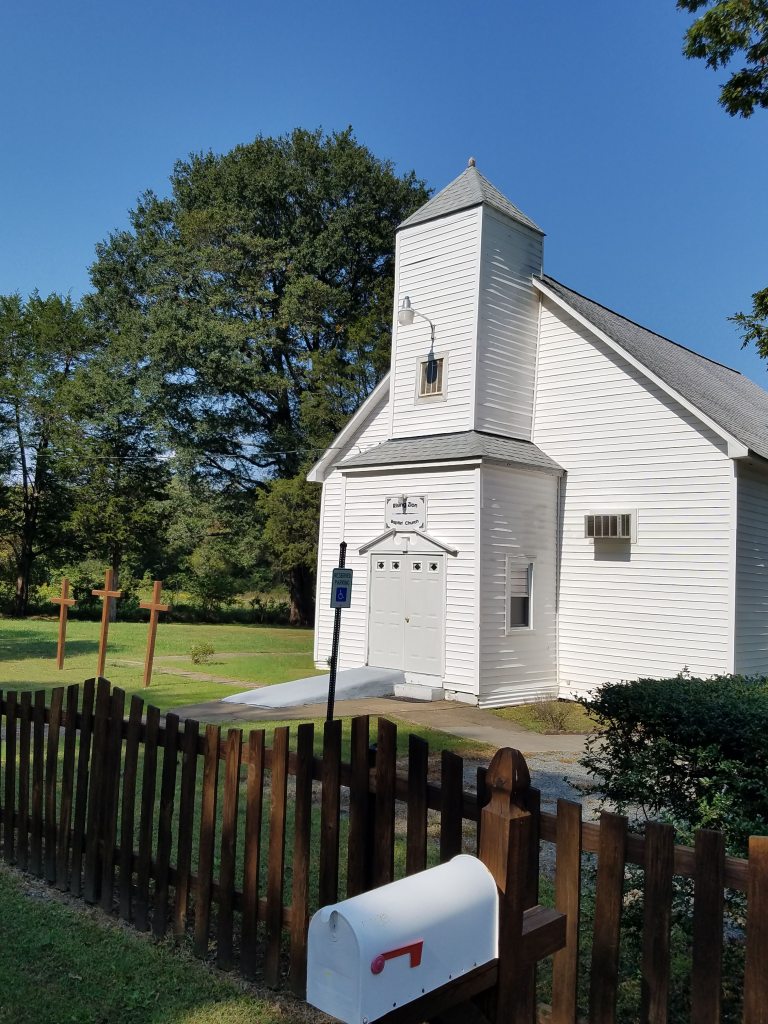
Rising Zion Baptist Church
13393 Raccoon Ford Rd, Culpeper, VA 22701
This Gallivant was taken by Mairi and Dave on October 4, 2020
 Mairi & Dave's Gallivant Through Virginia and About